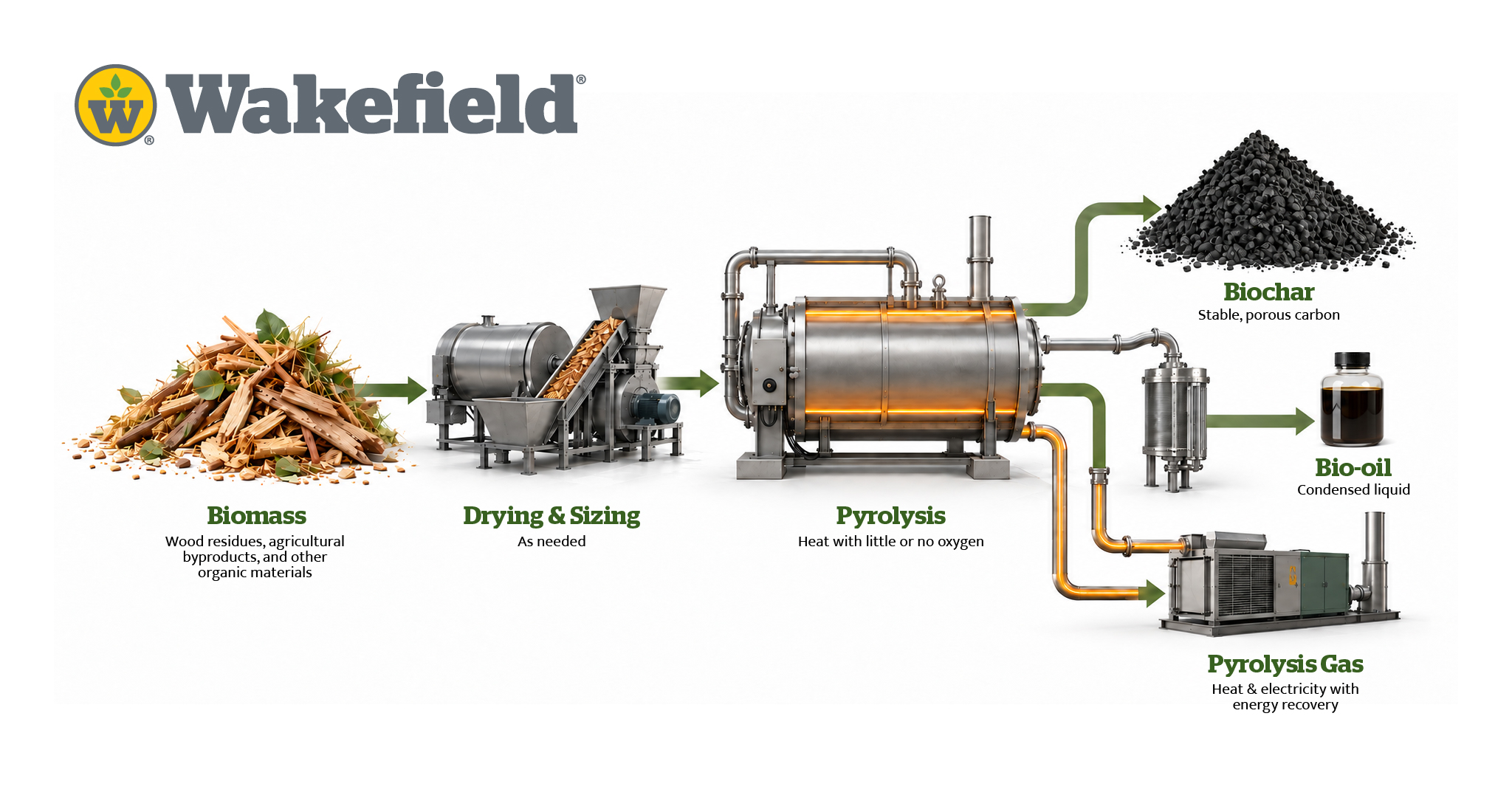
A wood chip can become more than fuel or mulch. Through pyrolysis, it can become biochar: a carbon-rich material with uses in soil and manufactured products. The process changes the wood itself, creating a material that behaves differently from the biomass it came from.1
Pyrolysis means breaking down material with heat in an environment with little or no oxygen. When used to make biochar, it preserves part of the biomass carbon as a solid instead of allowing it to burn away.1
What happens inside the process?
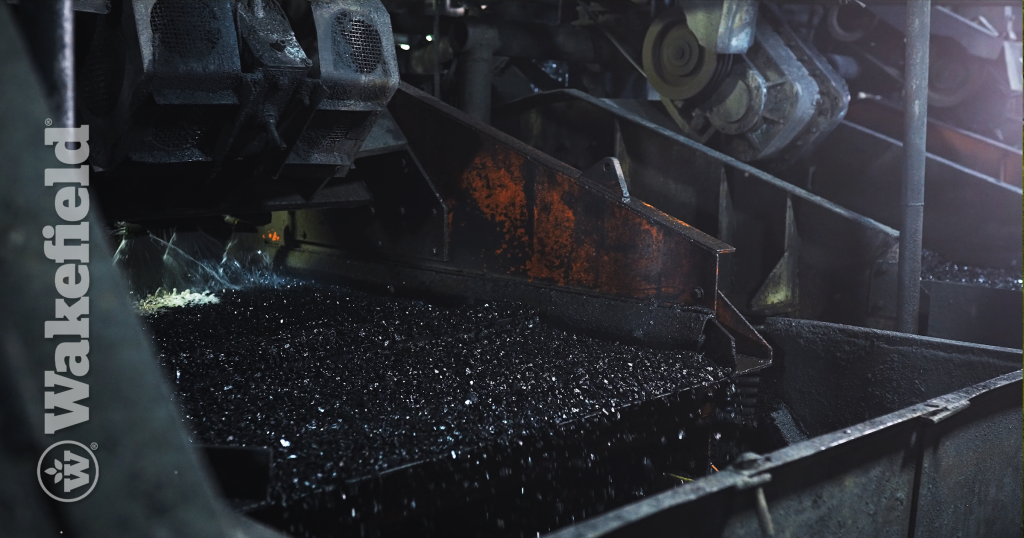
Wood, nutshells, and other plant residues contain carbon built into their natural structure. As these materials heat up, they release vapors and gases, leaving a carbon-rich solid behind. That solid is the starting point for biochar products.1, 2
The vapors and gases leave the hot material. Some vapors can be cooled into a liquid called bio-oil; other gases remain gaseous. A production system can separate these outputs and put them to different uses. Biochar is one of the process’s main products, alongside the liquid and gas streams.2
This is why pyrolysis differs from simply burning wood. It controls the conditions around the heated material to retain a useful solid carbon product.
How production choices shape biochar
The same broad process can produce different results. Slow pyrolysis generally favors a larger share of solid char, while fast pyrolysis is often designed to collect more liquid bio-oil. Both can produce biochar.3
Temperature also changes the solid that remains. In experiments with Douglas fir wood, fir bark, and poplar, increasing the pyrolysis temperature changed the biochar’s surface area and surface chemistry. The differences reached beyond its black appearance to the surfaces where it interacts with other materials.4
The starting material matters, too. Wood, bark, and crop residues bring different structures and mineral contents into the process. Together with production conditions, those differences influence properties such as carbon content and pH.3
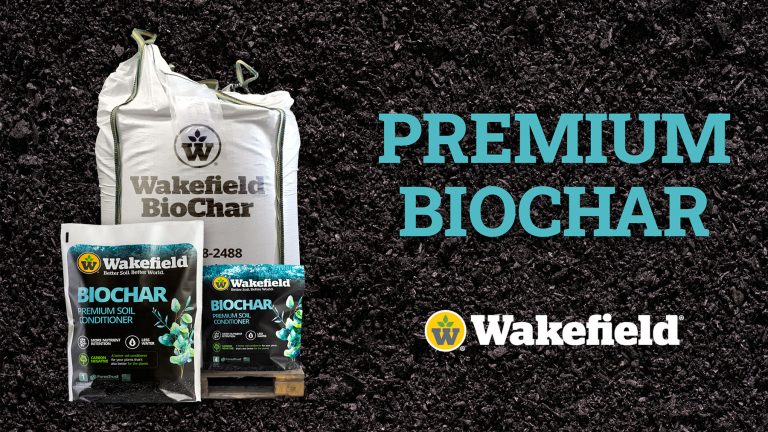
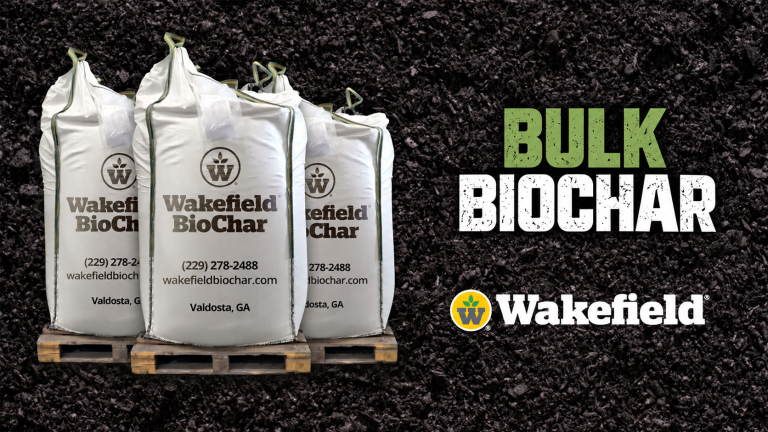
For someone choosing biochar, its origin and production history help explain what is in the bag or bulk load. Our article on choosing biochar for soil and growing media connects those properties with material selection.
Giving biomass carbon a longer life
Pyrolysis can turn wood and plant residuals into material with lasting value. Instead of using those resources only for their energy, producers can retain some of their carbon in biochar.
The transformation makes that carbon more resistant to decomposition. When biochar is used in soil, it can retain carbon while helping the soil hold water and nutrients. Its carbon storage depends on the material’s properties and what happens to it after production.1, 5
Soil is one destination. Biochar also gives manufacturers a biomass-derived ingredient for products such as composites and construction materials. Our What Is Biochar? article explores these uses in more detail.
Sources and notes
-
Digging into Biochar Describes oxygen-limited production, biomass sources, and soil uses. The discussion here concerns biomass pyrolysis for biochar; pyrolysis also has applications involving other materials View Source ↩
-
Fast Pyrolysis and Hydroprocessing 2012. Illustrates char separation, vapor condensation, and non-condensable gas. Collection and use of these streams vary with system design View Source ↩
-
Use of Biochar from the Pyrolysis of Waste Organic Material as a Soil Amendment Washington State University research summarized by USDA ARS, accepted in 2009. Examines feedstocks, temperature, and the balance between biochar and bio-oil. Historical prices and economic estimates are not used here View Source ↩
-
Influence of feedstock source and pyrolysis temperature on biochar bulk and surface properties 2016. Laboratory study of wood and bark at six temperatures. Supports changes in surface properties, not a universal best temperature or a Wakefield production specification View Source ↩
-
Biochar Explains transformation into more stable carbon and the role of feedstock and production conditions. Carbon retained in biochar is distinct from carbon released if the material is later burned for energy View Source ↩