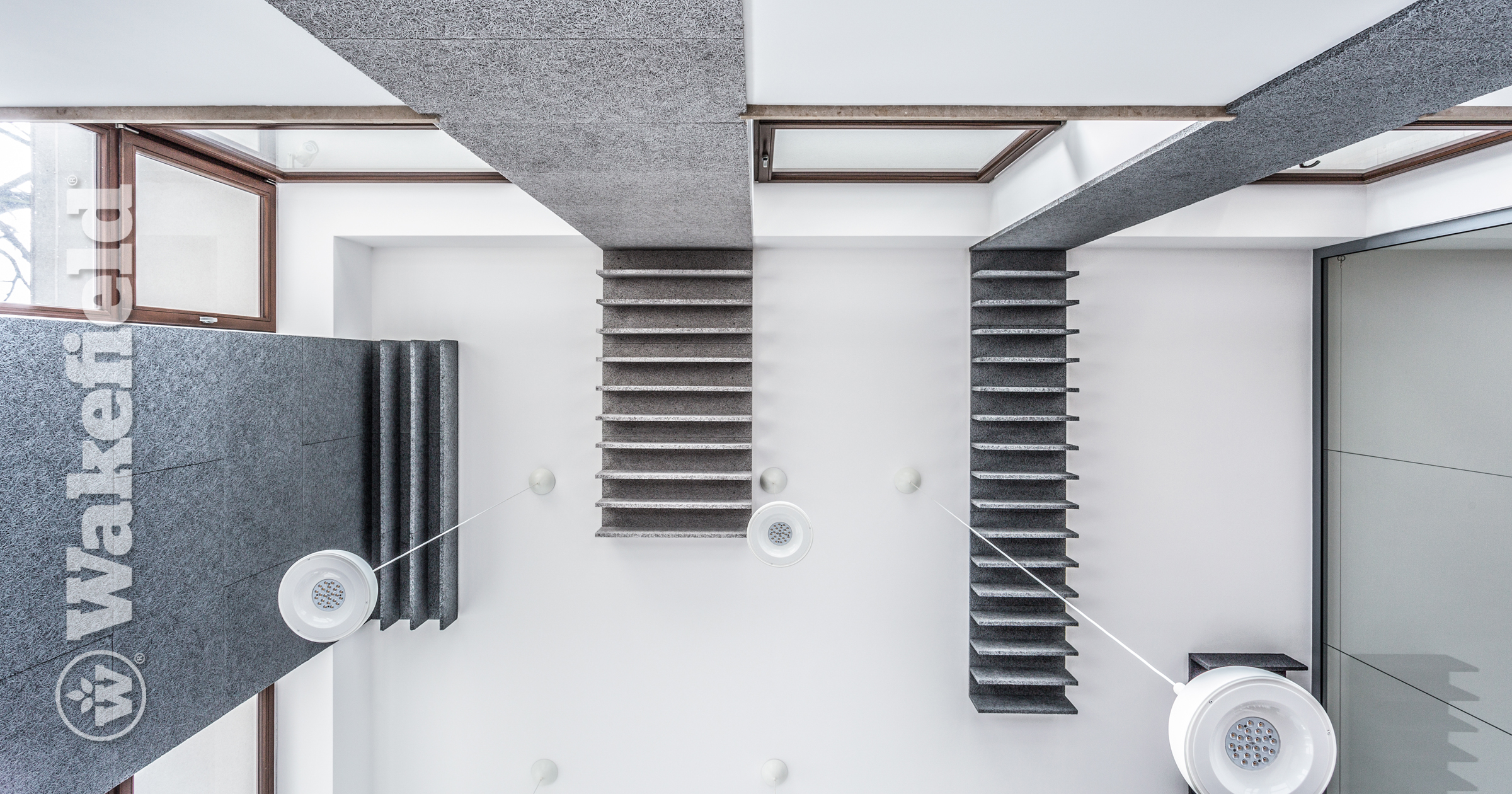
A ceiling panel can carry a carbon story that is invisible from the room below. Biochar is already part of commercial panels designed to lower the carbon footprint of buildings. Blended with the other ingredients, it becomes part of a familiar finished product.1
For building-product manufacturers, that is an appealing place to work: inside the material itself. Biochar turns wood and other biomass into a carbon-rich ingredient that can replace part of an existing formulation. Its uses range from ceiling panels to polymer composites.1, 3
A lower-carbon ceiling, already in production
Armstrong’s ULTIMA Low Embodied Carbon ceiling panels contain biochar alongside mineral wool, perlite, starch, and recycled paper. The panels are made through a wet-forming process and installed in a ceiling grid.1
Compared with standard ULTIMA panels, the revised formulation has a 43% lower carbon footprint from raw-material supply through manufacturing. Armstrong documents that comparison in a verified environmental product declaration summary. The company identifies biochar as part of its shift toward renewable ingredients with a lower carbon impact.2
The familiar white ceiling panel gives architects and building owners a way to choose a lower-carbon product within an established product category. For manufacturers, the opportunity starts further upstream—with the ingredients that go into the panel.
Carbon within a composite blend
In polymer composites, the carbon can contribute to the material’s behavior as well as its renewable content. Research on wood-biochar-filled polyamide found gains in strength and stiffness, along with lower estimated production impacts as biochar replaced part of the polymer.3
Those applications give manufacturers several routes into biochar: a carbon-rich ingredient in a wet mix or a filler in a molded component. Our article on biochar in rubber, plastics, and composites looks more closely at what the carbon can contribute inside a blend.
Choosing the form that fits your material
The amount of water arriving with the biochar can matter as much as particle size. A wet-forming process and a dry compound may call for different starting materials. Wakefield offers several forms of wood-derived biochar to meet those needs.
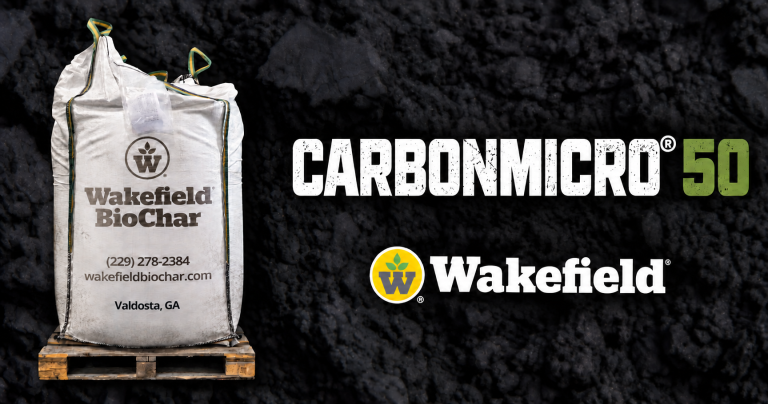
CarbonMicro® 50 supplies a fine, low-moisture powder for manufactured products. Premium Biochar offers bulk material for blends that accommodate its moisture, while Premium Biochar LM™ provides a lower-moisture bulk option for blending or further processing.
We can help with the biochar side of your next product: material specifications, samples, packaging, and supply. Visit Materials & Manufacturing to discuss what you make and the carbon ingredient you need.
Sources and notes
-
ULTIMA Low Embodied Carbon panel EPD Lists 10–15% biochar and describes wet forming. The declaration documents the finished panel; it does not isolate biochar’s contribution to acoustic, fire, or other performance ratings, or identify its supplier View Source ↩
-
Verified EPD optimization summary Compares A1–A3 global warming potential, including biogenic carbon: 0.327 versus 0.187 kg CO₂e per square foot. The 43% reduction concerns the two panel formulations through manufacturing, not their whole life cycle or biochar alone View Source ↩
-
Polyamide/biochar composites 2025. Wood-derived biochar in PA1010 increased strength and stiffness while reducing impact resistance and stretch before breaking. Production-impact estimates concern composite granules and vary with energy and carbon-accounting assumptions. Primary indexed methods/results reviewed; direct full-text retrieval was unavailable. Wakefield products were not tested View Source ↩