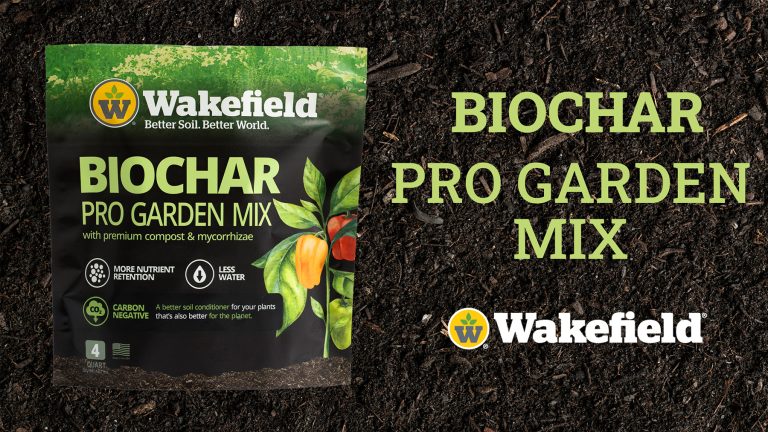

Biochar is moving beyond a specialty soil product. Gardeners, landscape professionals, growers, and businesses are paying more attention to its ability to support soil performance while storing carbon.
In this Wakefield BioChar webinar, we examine that growth from a practical market perspective. The discussion covers what is driving interest, how customers are using biochar, and what the expanding category can mean for retailers and landscape professionals.1
What the webinar covers
The webinar connects market growth with the reasons people choose biochar:
- Greater interest in long-term soil health
- Better management of water and nutrients in soil
- Demand for more sustainable soil products
- New opportunities for garden centers and landscape professionals
- Growth across retail, professional, and environmental markets
The session also draws on Wakefield’s experience supplying biochar through online, independent retail, and professional channels.1
Biochar is becoming a larger product category
Industry research supports the broader growth discussed in the webinar. The International Biochar Initiative’s 2023 market survey gathered responses from more than 1,000 stakeholders in 101 countries. It estimated that global biochar production grew at a compound annual rate of 91% between 2021 and 2023.2
The organization’s newer 2025 market survey included 930 respondents from 96 countries. Its findings describe an industry moving from emerging technology toward scaled production. Demand now spans agriculture, carbon markets, construction, remediation, and industrial uses.3
For retailers and landscape professionals, that expansion matters. It brings more people into the category and creates more opportunities to connect biochar with familiar soil needs.
Soil performance gives customers a reason to care
Market growth alone does not sell a soil product. Customers need to understand what it can do.
Biochar creates a durable, porous structure within soil. That structure can help soil manage water and nutrients while supporting the living environment around plant roots. Unlike organic materials that break down quickly, biochar can remain part of the soil for a much longer period.
These benefits give retailers and landscape professionals several clear ways to introduce the product:
- Improving garden and landscape soils
- Building biochar into planting and soil-improvement projects
- Supporting water and nutrient management
- Adding durable carbon to soil
- Combining biochar with compost and other soil materials
The goal is not to give every customer a technical lecture. It is to connect biochar with the soil problem they are trying to solve.
Education helps build the category
A growing category still requires good product education. Customers may have heard of biochar without knowing how to use it or how it differs from charcoal, compost, or fertilizer.
Retailers can make the product easier to understand by placing it near related soil amendments and explaining its role in plain language. Biochar helps improve the soil environment. Compost contributes organic matter and nutrients. Fertilizer supplies plant nutrients. These products can work together, but they do different jobs.
Landscape professionals can use the same approach when discussing soil preparation, planting, turf, and long-term maintenance. The strongest message begins with the desired result, followed by clear product and application guidance.
Carbon removal is creating another source of demand
Biochar’s growth is not limited to physical product sales. It has also become an important part of the durable carbon-removal market.
CDR.fyi reported that 3.04 million metric tonnes of biochar carbon-removal credits were contracted between the beginning of 2022 and the middle of 2025. The organization also found that biochar accounted for most durable carbon-removal credits delivered and retired during that period.4
This market is different from selling biochar for gardens or landscapes. Still, it adds another reason for investment in production, measurement, standards, and supply. Those developments can help move the wider biochar industry forward.
Turn growing interest into better soil conversations
The webinar offers a useful view of where the category is going and why customers are paying attention. For retailers, biochar can add a distinctive soil-health product with a strong educational story. For landscape professionals, it can support projects that need better soil structure, water management, and lasting improvement.
Explore Wakefield BioChar products or use our Where to Buy directory to find purchasing options.
Sources and notes
-
Biochar & Better Soil: A Smarter Way to Build Healthier Landscapes and Stronger Margins YouTube webinar 2026. Wakefield presentation covering market indicators, sales observations, customer demand, soil benefits, and opportunities for retailers and landscape professionals. Runtime: 60 minutes, 42 seconds. View Source ↩
-
Global Biochar Market Soars to $600 Million in 2023, Setting the Stage for Future Growth 2023 Global Biochar Market Report announcement 2024. Reports survey participation, global production estimates, and the estimated 2021–2023 production growth rate. Figures are global industry estimates based on self-reported survey data. View Source ↩
-
2025 Global Biochar Market Report International Biochar Initiative 2026. Public report page describing a survey of 930 respondents in 96 countries across physical biochar, production, distribution, applications, and carbon markets. View Source ↩
-
Biochar Carbon Removal Market Snapshot 2025 CDR.fyi market insight 2025. Tracks reported durable carbon-removal transactions. Carbon-credit purchases, deliveries, and retirements are a separate market from retail and professional sales of physical biochar. View Source ↩