
A soil conditioner is a material added to soil to improve how the soil functions. It can change structure, water movement, airflow, nutrient retention, or biological activity. These changes create a stronger root-zone environment where plants can reach the resources they need.
Soil conditioners are used in gardens, lawns, landscapes, farms, and container mixes. Some break down and become part of the soil’s organic matter. Others, including biochar, provide a more lasting change to the soil structure.
What Does a Soil Conditioner Do?
Good soil needs both solid material and open pore space. Roots use these spaces to grow, take up water and nutrients, and exchange gases. Soil that is compacted, low in organic matter, or unable to manage water well provides fewer pathways for healthy root growth.
A conditioner helps create a better balance. Depending on the material, it can loosen dense soil, add water-holding capacity, improve drainage, reduce crusting, or help soil particles form stable groups. It may also support the bacteria, fungi, and other organisms that cycle nutrients and build soil structure. These connected functions are central to healthy soil.
Soil Conditioner, Fertilizer, and Amendment
These terms describe different jobs. A fertilizer is mainly used to supply plant nutrients such as nitrogen, phosphorus, and potassium. A soil conditioner focuses on improving the environment that holds and delivers water, air, and nutrients to roots.
“Soil amendment” is the broadest term. It includes almost any material mixed into soil to change it. Compost can act as a conditioner and a nutrient source. Lime changes soil chemistry. Sand or mineral aggregates change physical structure. Biochar acts mainly as a long-lasting conditioner that helps the soil retain and manage resources.
Common Types of Soil Conditioners
- Compost: Adds decomposed organic matter, nutrients, and active soil biology.
- Aged manure: Adds organic matter and plant nutrients when properly prepared.
- Bark and plant fibers: Add organic material and can improve the texture of planting mixes.
- Mineral conditioners: Materials such as lime, gypsum, clay, or sand change selected physical or chemical properties.
- Biochar: Adds stable carbon and durable pore space that supports water, nutrients, airflow, and soil organisms.
Many growing systems use more than one conditioner. Compost and biochar make a useful pair because compost contributes fresh organic matter and nutrients while biochar contributes lasting structure and retention.
Why Biochar Is a Long-Lasting Conditioner
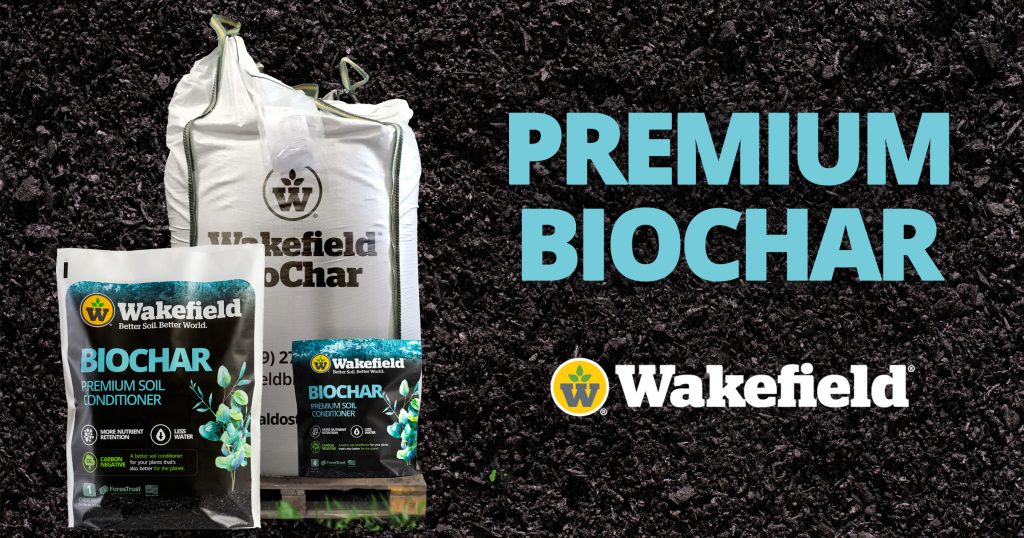
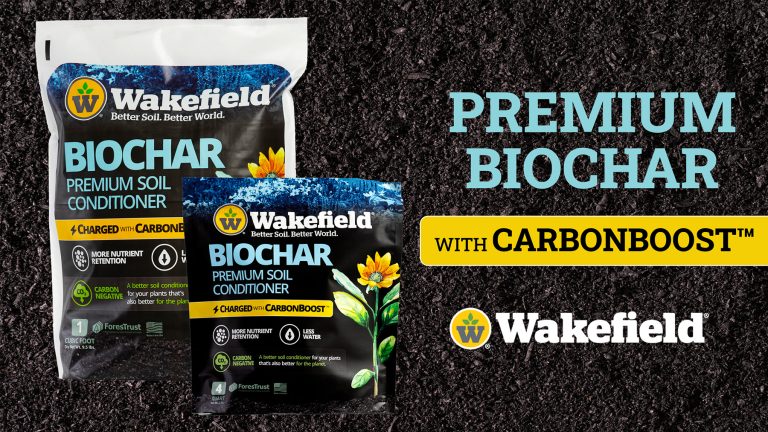
Wakefield BioChar makes biochar from wood waste using pyrolysis, a controlled heating process with limited oxygen. This converts the wood into a carbon-rich material while preserving a network of pores from the original plant structure.
When biochar is mixed into soil, its pores hold moisture and provide surfaces that retain nutrients near roots. The material also increases pore space for air and water movement and creates habitat for beneficial microorganisms. These qualities work together to support root development and more consistent soil performance.
Biochar does not break down as quickly as compost, bark, or other fresh organic materials. Its stable structure remains part of the soil through many growing seasons, making it a strong foundation for long-term soil improvement and carbon storage.
Building Better Soil With Biochar
Soil conditioners work best when their role matches the goal. Compost feeds the soil with organic material. Fertilizer supplies selected nutrients. Biochar helps the soil hold and manage water, nutrients, air, and biological activity.
Used together, these materials create a root zone that supports lasting plant growth. Explore Wakefield Premium Biochar, learn about preparing biochar with nutrients and moisture, or review ways to improve garden soil with amendments.