Biochar can bring renewable carbon into a formulation and contribute to its performance. Rubber studies have shown promising results with partial carbon black replacement, while work in molded plastics points to opportunities beyond carbon black—including alternatives to mineral fillers.1, 2
For manufacturers seeking renewable ingredients, that makes biochar worth a closer look. Its value comes from both its biomass source and the properties it can bring to a compound. The most useful examples connect the two: less fossil-derived filler in a rubber blend, or lower weight in a molded plastic part.1, 2
Renewable carbon with a role in rubber
Partial replacement allows biochar and carbon black to work together in a rubber compound. In a blend of natural rubber and polybutadiene, processed wood biochars replaced 30% of the carbon black with little change in tensile strength. The rubber stretched farther and absorbed more energy before breaking.1
The biochar’s preparation was part of that success. Milling with a small amount of silica broke down larger particles, helping the material work more effectively within the rubber blend. That connects a useful performance result to a property manufacturers can discuss with their biochar supplier: how the particles have been prepared.1
A lighter filler option for molded plastics
Biochar also creates opportunities in products that use mineral fillers. In polypropylene composites, researchers compared grass-derived biochar with talc. The biochar-filled material had lower density, offering a route to lighter parts of the same size. With suitable milling, its impact resistance reached a level similar to the talc-filled comparison.2
That gives biochar a place in discussions about part weight as well as renewable content. Carbon black replacement is one route into manufactured products; replacing a mineral filler is another. Each puts a different value on the biochar and calls for a different comparison.1, 2
More than a particle-size number
Particle size helps explain how biochar performs, but the connection with the surrounding polymer matters too. Work on toughened polypropylene found that smaller biochar particles supported greater strength and stiffness than larger particles. A compatibility additive also improved strength and stiffness by changing how the ingredients interacted.3
Those findings make the biochar’s preparation and surface properties part of its value. A fine powder is a starting point; its behavior inside the blend is what gives it a useful role. The aim is a combination of strength, stiffness, and toughness that suits the part.3
A molded component and a thin film draw on different strengths of a filler. Their performance needs give meaning to specifications such as particle-size range and composition—and to the replacement levels reported in research.4, 5
Biochar for your next formulation
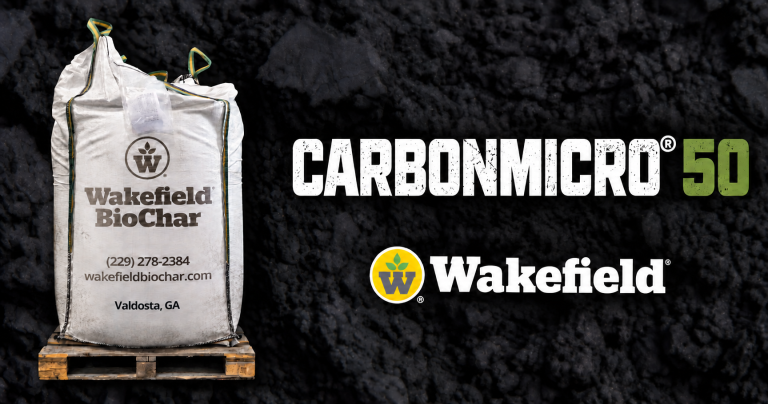
Wakefield CarbonMicro® 50 is a fine biochar powder made from wood residuals for manufactured products. We can provide product specifications and supply information to help your team explore renewable carbon alongside the materials you already use.
For a closer look at the material, see the CarbonMicro® 50 specification sheet. Visit Carbon Black Replacement for product and ordering information, or read our overview of biochar as a carbon black replacement for its wider uses in pigments and electrical applications.
Sources and notes
-
Rubber composites 2020. A 50/50 natural-rubber/polybutadiene blend used hardwood biochars milled with 1% silica. The 30% refers to carbon black filler replaced, not total product weight. Laboratory results do not establish tire performance or CM50 outcomes View Source ↩
-
Milled biocarbon in polypropylene 2018. Composites contained 27% filler and a coupling agent. Impact performance improved with milling; the comparison was with talc. Lower density does not mean every property matched or exceeded talc View Source ↩
-
Toughened polypropylene 2017. The study compared particle-size ranges and a compatibility additive in a blend containing an elastomer. Smaller particles improved strength and stiffness but reduced impact toughness relative to larger particles. It was not a carbon black replacement trial View Source ↩
-
Wood biochar in natural rubber 2025. Strength and processing results changed with substitution level. Findings across studies support material-specific choices rather than a universal loading or savings claim View Source ↩
-
Biochar in agricultural mulch films 2024. The tested biochar required changes in film thickness and loading to approach carbon black’s opacity. The comparable formulation did not meet the intended application’s mechanical needs. The example illustrates why results for molded parts do not transfer directly to thin films View Source ↩