Biochar gives wastewater-treatment developers a renewable carbon material with several useful roles. It can capture selected pollutants and provide surfaces for treatment microbes. Wood biochar can also be processed into activated carbon for removing trace compounds left after biological treatment.1, 2
These applications put wood-derived carbon to work at different points in a treatment system: as a filter medium, a home for biofilms, or an adsorbent developed for a particular treatment goal.
A filter medium that supports biological treatment
A biochar filter can do more than hold particles. Its surfaces can capture dissolved compounds through adsorption, which holds molecules on the carbon’s surfaces. They also support biofilms—the microbial communities that help break down organic matter.1
In a German laboratory study using sewage from a municipal treatment plant, biochar-filled filters removed more organic matter and reduced cloudiness more effectively than filters filled with woodchips or gravel. The filters operated without added oxygen, bringing physical filtration and biological treatment together in the same bed.1
The carbon was the material that wastewater flowed through. That gives biochar a direct role in the treatment equipment, beyond its more familiar use as a soil ingredient.
Wood-based carbon for treatment polishing
Removing trace organic pollutants after biological treatment gives wood-derived carbon another role. Biochar can be processed into activated carbon, developing the pore structure that provides more surface for adsorption.2
Researchers tested activated carbon made from wood and woody residues in treated wastewater. Under the selected production conditions, it captured a set of 15 organic micropollutants as well as or better than the commercial activated carbon used for comparison. The degree of activation mattered more than the quality of the wood feedstock.2
For media manufacturers, this connects renewable sourcing with an established treatment material. Wood and wood residuals can provide the starting carbon, with activation developing its ability to capture the targeted compounds.
Giving biochar a role in nutrient treatment
Biochar also offers a base for media designed to manage nitrogen and phosphorus. Developers can modify its surfaces to capture particular nutrients or combine it with biofilms that transform or take up nutrients.3
Those approaches make use of different properties of the material. Surface treatments change how the carbon interacts with dissolved compounds. Biofilms put its surfaces to work as a support for living treatment communities. Research has explored these combinations in biological reactors and constructed wetlands, among other systems.3
From wood residuals to treatment media
Wastewater applications give wood residuals another useful destination. A biochar producer supplies the carbon material; media manufacturers and treatment developers shape its form and properties around the process.
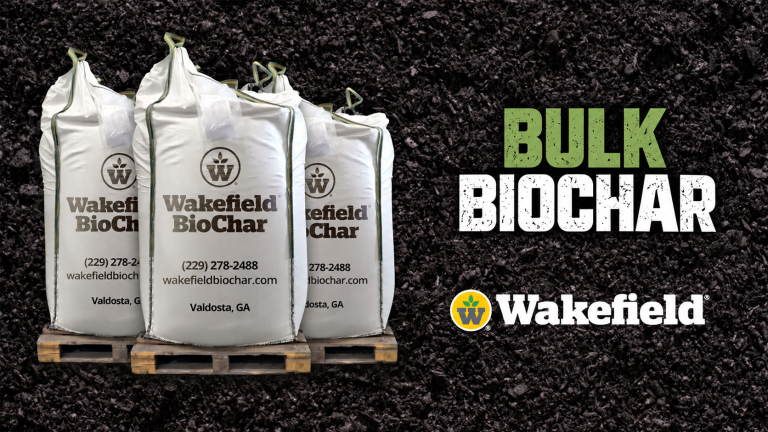
At Wakefield, we can discuss wood-biochar specifications, samples, processing needs, and bulk supply for that work. Explore our Water & Air Filtration options to find a starting material for your application.
Sources and notes
-
Efficient Low-Cost Anaerobic Treatment of Wastewater Using Biochar and Woodchip Filters 2018. Laboratory columns treated sewage from a municipal plant. Biochar improved organic-matter and turbidity removal compared with woodchips and gravel. Nitrogen and phosphorus removal was low, without a significant difference among media. This was a filtration experiment, not a full-scale plant installation or a demonstration of complete sanitation View Source ↩
-
Wood-based activated biochar to eliminate organic micropollutants from biologically treated wastewater 2020. Tests used physically activated wood carbon in treated wastewater. The comparison concerns the selected activated materials and 15 model pollutants; it does not describe untreated biochar or establish performance for a Wakefield product View Source ↩
-
Biochar coupled with multiple technologies for the removal of nitrogen and phosphorus from water: A review 2024. Covers modified surfaces and combinations with microorganisms, biofilms, wetlands, and other treatment technologies. Nutrient capture and biological transformation are different processes. The review reports limited phosphate adsorption by some unmodified biochars, supporting targeted media development rather than a general phosphate-removal claim View Source ↩