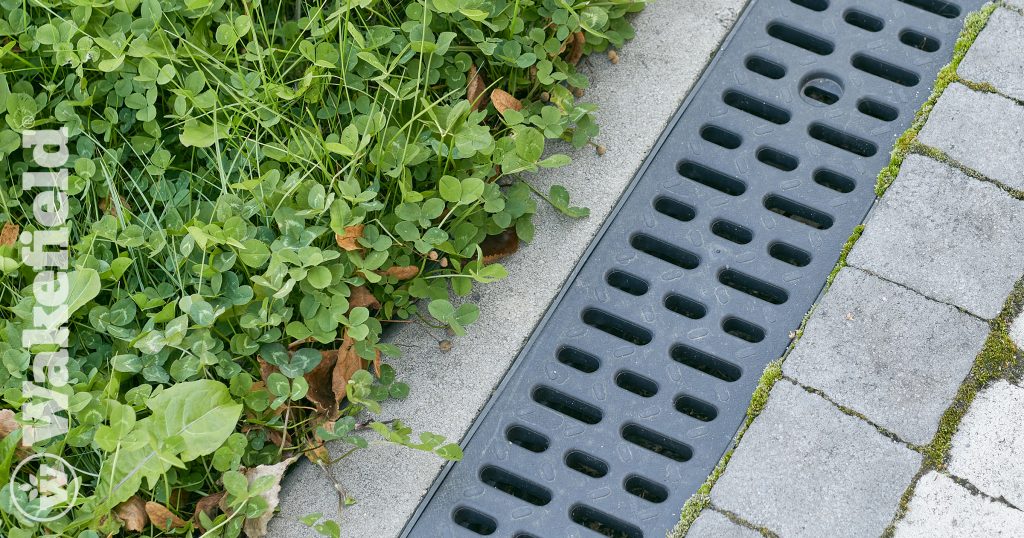
Stormwater picks up bacteria, nutrients, metals, sediment, and other pollutants as it moves across streets and developed land. Biofilters help manage that runoff by directing water through sand, soil, plants, and other filter media. These systems slow the water and capture many pollutants, but ordinary sand filters can struggle to retain bacteria such as Escherichia coli.
A 2014 study published in Water Research examined whether wood-based biochar could improve this part of stormwater treatment. The researchers found that adding biochar to sand greatly increased E. coli retention and helped keep captured bacteria from washing back out when flow resumed.
Why Test Biochar in Stormwater Filters?
Stormwater rarely moves through a filter at a steady rate. A filter fills during rain, drains during dry weather, and fills again during the next storm. These wet and dry cycles can release bacteria that were previously attached to sand grains. Natural organic matter in runoff can also occupy attachment sites and make bacterial capture more difficult.
Biochar offers a different surface. It contains a large network of pores and far more attachment area than sand. It also holds water within the filter media. The researchers wanted to learn whether these properties could improve bacterial capture during both steady and intermittent flows.
How the Study Was Conducted
Researchers packed laboratory columns with clean sand or sand amended with 5% biochar by weight. They tested three wood-chip biochars: one commercial material and two biochars produced at different temperatures. Synthetic stormwater containing E. coli was then pumped through the columns.
The work included an attachment phase and a mobilization phase. First, the team measured how much bacteria passed through each filter. They then paused the flow, allowed the columns to drain, and restarted the water. Short and long pauses showed whether retained bacteria would be released between simulated storms. Some tests also included natural organic matter to represent a more complex stormwater mixture.
What the Research Found
The biochar-amended sand removed one to three orders of magnitude more E. coli than sand alone during saturated flow. All three biochars improved bacterial retention. The results also showed that biochar properties influenced performance, with materials containing lower volatile matter and polarity producing stronger removal in this experiment.
Biochar’s advantage continued when the water stopped and restarted. Across the intermittent-flow tests, sand released an average of 19% of the bacteria it had captured. The three biochar treatments released only about 1% to 3%. Natural organic matter reduced removal, but the biochar-amended filters still captured more bacteria than sand alone.
Why the Findings Matter
The study shows how a small addition of porous carbon can improve a familiar filter material. Biochar gives bacteria more places to attach and helps the media remain moist as water drains. These features make captured bacteria less likely to move back into the water during the next flow event.
This creates opportunities for rain gardens, bioretention systems, roadside filters, and other forms of green stormwater infrastructure. Biochar can be made from renewable wood waste, giving communities a filter material that also supports beneficial reuse and long-term carbon storage.
Capturing E. coli is not the same as disinfecting water. A working treatment system still needs an appropriate design and a plan for maintaining or replacing filter media. Even so, this research demonstrates a valuable role for wood-based biochar in passive water treatment. Its surface area, pore structure, water-holding ability, and renewable origin can work together to improve urban water management. Explore more about biochar in municipal wastewater remediation and water conservation.
References
-
Efficacy of Biochar to Remove Escherichia coli From Stormwater Under Steady and Intermittent Flow Water Research, Volume 61, pages 288–296 2014. Laboratory column study comparing E. coli removal and remobilization in sand and three wood-biochar-amended filter media. View Source