Wood chips, bark and sawdust can have value beyond the process that produced them. Some already find uses in paper, panels, mulch or fuel. For suitable wood residuals, conversion into biochar offers another way to keep material in productive use.
Biochar is a carbon-rich material with uses in soils and other products, from plastics to inks and building materials.
What makes reuse beneficial?
Beneficial reuse means more than finding somewhere else to put unwanted material. The U.S. Environmental Protection Agency describes beneficial use as replacing new raw materials with secondary materials that provide a useful function, meet product specifications and protect human health and the environment. 1
How wood residuals become biochar
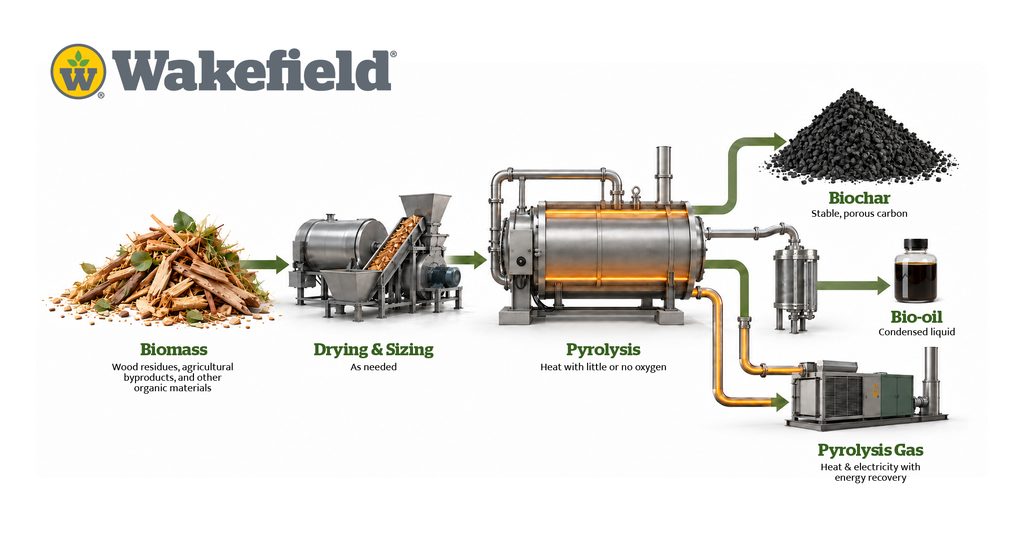
Pyrolysis heats biomass with little or no oxygen, converting part of it into a carbon-rich solid. Wood chips, sawdust and bark are examples of materials that can serve as feedstocks. Their condition and the production process influence the properties of the resulting biochar.
The carbon in biochar can remain in soil longer than carbon in the same biomass added directly. How long it persists depends on the biochar and its environment. This is one reason biochar can contribute to long-term carbon storage. 2
What affects a useful outcome?
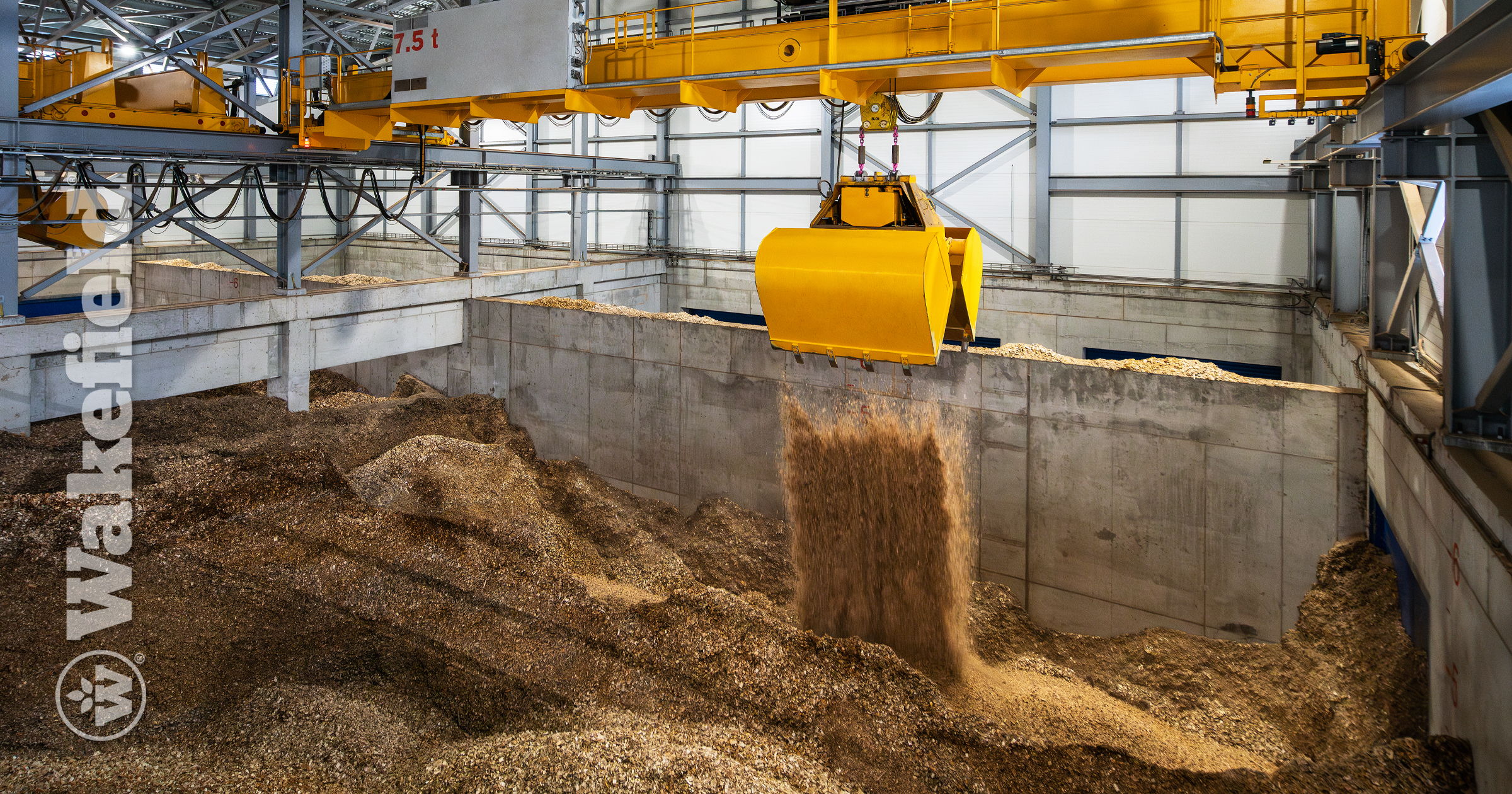
A consistent material stream makes it easier to plan processing and product quality. Moisture, particle size and unwanted materials affect the preparation needed before conversion. The amount available and the distance it must travel also influence whether an opportunity is practical.
Research on a pyrolysis system operating at a sawmill illustrates how preparation, equipment performance, labor and the value of the finished biochar affect project economics. In that study, productivity, labor costs and the selling price of biochar strongly influenced financial results. 3
Beneficial reuse can create value, but savings do not follow automatically from converting a residual into a biochar product. Existing uses, handling costs and the requirements of the new market all belong in the comparison.
A place for biochar in the circular economy
Biochar adds a valuable option to the circular economy: turning wood residuals into ingredients for soil products and industrial materials, with the potential to store carbon over the long term.
To discuss commercial-scale beneficial reuse opportunities, contact Wakefield BioChar.
Sources and notes
-
Beneficial-use definition and evaluation context View Source ↩
-
Stability of Biochar in Soil 2009. USDA ARS summary and abstract of the book chapter. View Source ↩
-
Financial performance of a mobile pyrolysis system used to produce biochar from sawmill residues Forest Products Journal, 65(5/6), 189–197 2015. View Source ↩