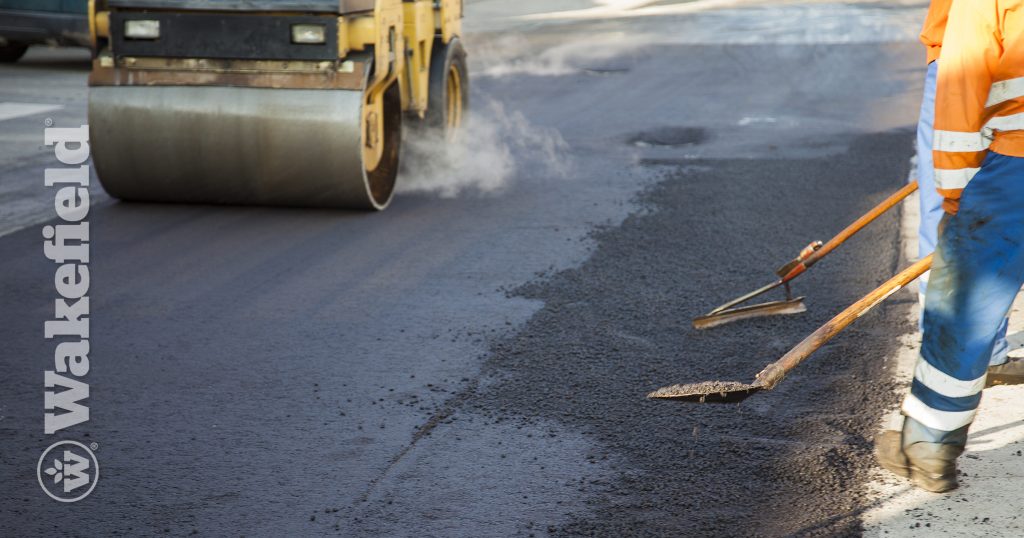
Biochar is becoming part of the material beneath our feet. Concrete footpath trials in Australia have put biochar made from coffee grounds and wood into everyday infrastructure, moving the idea from laboratory specimens to a surface people walk on.1
For manufacturers, the interest extends beyond finding a home for biomass residuals. Biochar can contribute to strength, water behavior, and the use of conventional ingredients. Its value comes from the job it performs inside the material.2, 3
Helping cement-based materials develop strength
Biochar’s pores and particles offer two useful routes into cement-based products. Pre-soaked biochar can carry water into a mortar mix and help support curing from within. Research on these mixes reported improved strength and water tightness under both moist and air curing.2
Fine particles offer another benefit. A wood-biochar mortar study found that small additions accelerated hydration—the reaction through which cement develops strength—and improved both early and 28-day strength. The resulting mortar also absorbed less water through capillary action.3
Softwood research adds to that picture. In a 2025 study, researchers turned spruce sawdust into biochar and used small amounts to replace cement in test pastes. The mixes developed higher compressive strength and absorbed less water through capillary action.4
Replacing sand with a useful carbon ingredient
At RMIT University, researchers converted spent coffee grounds into biochar and used it to replace part of the sand in concrete. In a tested mix containing coffee biochar in place of 15% of the sand by volume, compressive strength increased by about 29%.5
The same research program has moved into footpath and infrastructure demonstrations. That gives the work a practical next step: placing biochar-containing concrete in the field and following its performance over time.1
Sand replacement and cement modification give biochar different roles. One substitutes for part of an aggregate; the other uses a small addition to change how the cement-based material develops. Together, the wood and coffee studies show promising roles for plant-based biochar in construction. Further research into different feedstocks and mixes could open more possibilities for concrete and other cement-based products.3, 5, 4
Connecting performance with lower-carbon design
Biochar also places plant-derived carbon inside a durable product. RMIT’s later life-cycle work reported a lower carbon footprint for the coffee-biochar concrete scenarios it assessed, connecting the ingredient’s source with the concrete’s environmental performance.6
For a manufacturer, that creates an opportunity to develop the material and its carbon story together: what the biochar contributes, which ingredient it replaces, and how the finished product is made.
Choosing a material for your process
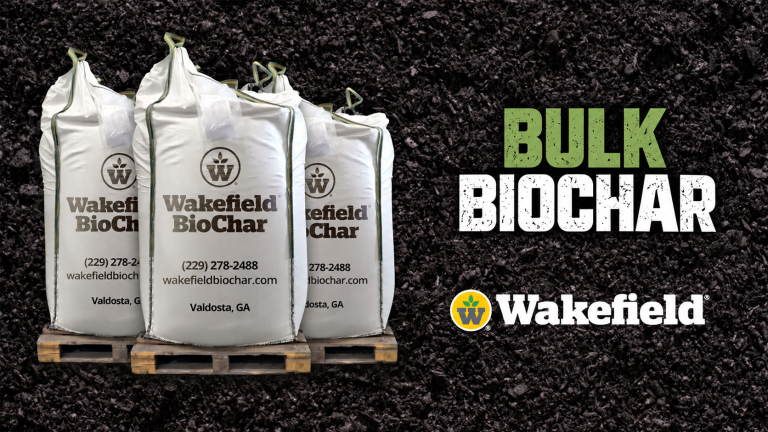
Wakefield supplies wood-based biochar in several forms. Premium Biochar provides a bulk starting material; Premium Biochar LM™ offers lower moisture; and CarbonMicro® 50 supplies a micronized powder.
We can discuss particle size, moisture, documentation, samples, and supply around your team’s material requirements. Visit Concrete & Asphalt to explore the options.
Sources and notes
-
Coffee-concrete field trials University reporting describes installed footpaths using coffee- and wood-derived biochar. Field demonstrations are distinct from long-term durability results View Source ↩
-
Pre-soaked biochar in mortar 2018. With published correction. Primary abstract and indexed correction reviewed. Water retention included more than pore water alone; the corrected strength range is 23–32%, not the original 40–50%. No percentage or as-supplied Wakefield equivalence is claimed here View Source ↩
-
Wood-biochar micro-fillers 2019. Primary abstract reviewed. Tested particles and dosages differed from commercial Wakefield specifications. Capillary absorption is a specific measurement, not proof of every type of water resistance View Source ↩
-
Softwood biochar in cement binders 2025. Spruce sawdust was pyrolyzed at 350°C and ground, then tested at 0.5–2.0% cement replacement by mass in cement pastes. Publisher-indexed methods, results and conclusions reviewed. Compressive strength and capillary absorption results concern these pastes; the coffee study concerns concrete with sand replacement. These are complementary findings, not a direct feedstock comparison or a test of Wakefield loblolly-pine biochar View Source ↩
-
Coffee biochar as sand replacement 2023. Primary indexed abstract/highlights reviewed. The cited result used coffee grounds pyrolyzed at 350°C and volume-based sand replacement. A correction addresses an Australian concrete-production statistic, not this strength result View Source ↩
-
Coffee-concrete life-cycle assessment 2025. University account of the linked study; full assessment inventory was not reviewed. Findings do not establish a Wakefield product footprint or make every biochar concrete carbon negative View Source ↩