
Remove diseased plants and problem weeds
Pull annual vegetables, fallen fruit, and weeds before winter. Remove plants affected by disease or heavy pest damage so those problems are less likely to return in spring.
Leave useful habitat in place
Keep healthy perennial stems, seed heads, and some leaves where they can shelter insects and feed birds. Cut back only material that is diseased, damaged, or blocking necessary garden work.
Build the soil with biochar and compost
Add wood-based biochar with finished compost to open garden beds. Compost supplies organic matter and nutrients, while biochar helps retain water and nutrients and adds lasting structure.
Protect bare soil through winter
Cover open beds with organic mulch or a winter cover crop. Living roots and surface cover reduce erosion, limit weeds, soften heavy rain, and protect soil structure.
Store tools and plan for spring
Clean soil from tools, sharpen cutting edges, drain hoses, and store equipment in a dry place. Record what grew well and decide which beds, crops, or soil projects need attention next season.
The end of the fall growing season is the beginning of next year’s garden. A few well-chosen tasks can protect soil, reduce spring work, and create better conditions for roots. The goal is not to clear away every sign of life. It is to remove problems, keep useful habitat, cover bare ground, and build healthier soil before winter.
Clean Up with Purpose
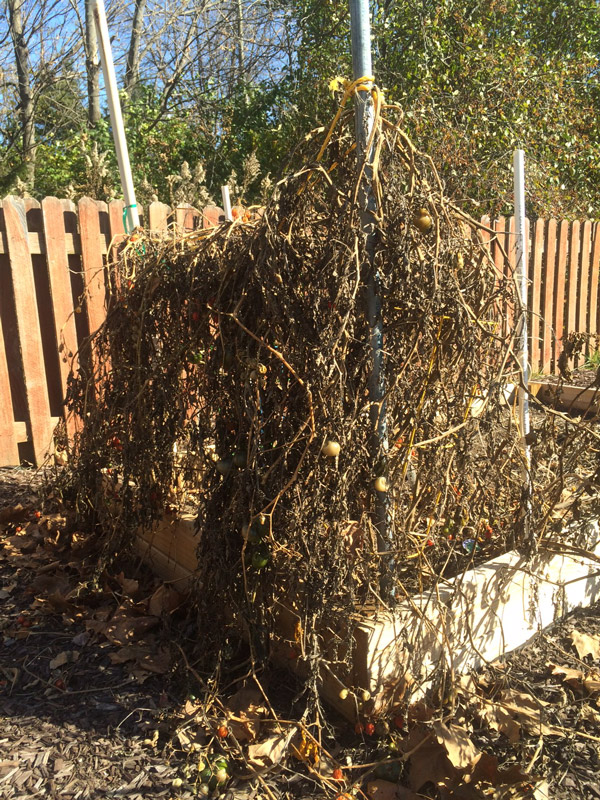
Start with plants that could carry trouble into spring. Remove diseased leaves, damaged vegetables, fallen fruit, and weeds that are setting seed. This limits places where certain garden pests and plant diseases can remain through winter.
Healthy plant material can serve a different purpose. Add annual crops and leaves to compost, or leave selected stems and seed heads as winter habitat. Birds feed on seeds, and beneficial insects shelter in hollow stems and leaf litter. A balanced cleanup protects the garden without removing everything that supports its living community.
Build Soil Before Winter
Fall is a useful time to add compost and wood-based biochar to empty beds. Compost supplies organic matter and nutrients. Biochar adds a porous structure that helps soil hold water and nutrients in the root zone while supporting airflow and soil organisms.

These materials work together over winter. Moisture moves through the soil, microorganisms remain active when conditions allow, and organic matter begins to break down. By spring, roots enter a soil environment with better structure and a stronger ability to manage water and plant nutrients. Biochar does not supply every nutrient itself; it helps the soil retain and use the nutrients supplied by compost and other sources.
Keep the Soil Covered
Bare soil is exposed to wind, pounding rain, temperature swings, and weed growth. A layer of shredded leaves, straw, compost, or another organic mulch protects the surface and slows moisture loss. Mulch also creates a gradual supply of organic material as it breaks down.
A cover crop provides living protection. Oats, rye, clover, peas, and other choices hold soil with their roots, compete with weeds, and return plant material to the bed. The best choice depends on winter temperatures and when the bed must be ready for spring planting.
Get Ready for Spring

Clean and store tools before cold weather makes the work harder. Use the quiet season to review what succeeded, plan crop locations, and list the materials needed for spring. This turns fall cleanup into a head start rather than an ending.
A protected, well-structured bed is ready to respond when temperatures rise. Biochar, compost, mulch, and living roots each support a different part of the soil system. Together, they help the garden hold water, retain nutrients, resist erosion, and support healthy growth in the next season. Explore Wakefield’s biochar soil products when planning your spring garden.