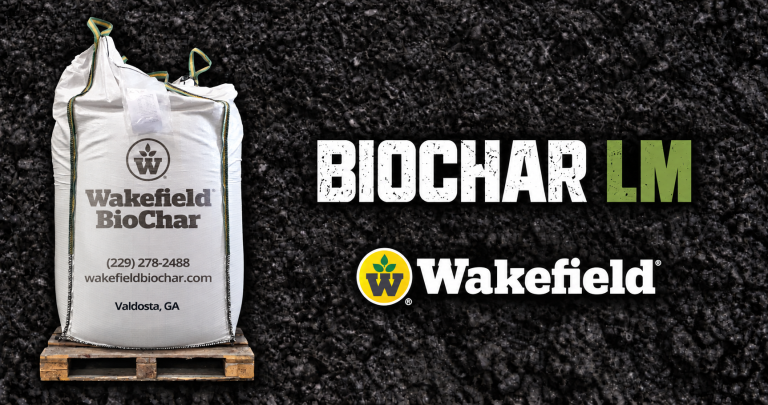
Choosing biochar for a soil or growing-media product starts with the material: its composition, particle size, incoming moisture, and how it arrives at your facility.
Biochar’s lasting pore structure can help your products hold water and nutrients around roots. We can help you find a biochar that fits your formulation and production needs, with product specifications, samples, and supply options to support your decision. 1
Biochar Properties That Matter
Particle size affects how biochar interacts with the surrounding ingredients and pore spaces. The size distribution also matters for screening and the appearance of your finished product. 1
Carbon and ash content tell you more about what you’re adding to the blend. Carbon forms the main part of wood biochar’s durable framework, while ash is its mineral fraction. The balance between them is one of the key differences among our biochar products. 1, 2
Incoming moisture affects delivered weight and handling. For operations that need less incoming water, Wakefield offers a lower-moisture biochar alongside our standard products. 2
Wakefield Biochar Options
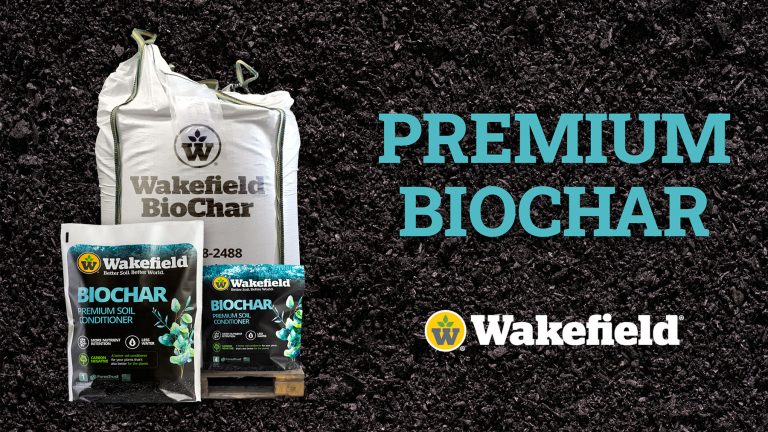
Premium Biochar is our starting point for potting soils, growing media, and controlled formulations. Its higher carbon content and lower ash give you closer control over ingredient composition. 2
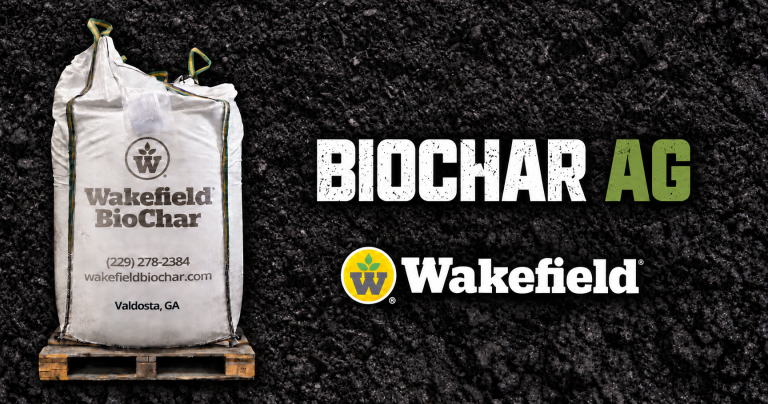
Biochar AG™ is an economical alternative for broader soil, compost, and amendment blends where its higher ash content fits the formulation. Premium Biochar LM™ offers a lower-moisture option when your process or finished product calls for less incoming water. 2
Biochar in Growing Media
Growing-media research shows how these properties can benefit plants. Selected wood-biochar nursery blends supported good pine seedling growth with less frequent watering. In peat-based tomato and pepper media, selected wood biochars improved nutrient uptake efficiency and reduced nitrate and phosphate leaching. 3, 4
You can read more about biochar and water retention and how retained nutrients remain available to roots in our Learning Center. University of Georgia Extension takes a closer look at biochar’s effects on water capacity, air space, density, pH, and electrical conductivity in growing media. 1
Product Documentation and Supply
We can provide product specifications, safety data sheets, and representative samples for your team to review. For larger-volume orders, we can also discuss Certificates of Analysis and any specific documentation you need. 2
Premium Biochar and Biochar AG™ are available in super sacks or loose truckloads. Share your material requirements, expected volume, delivery schedule, and receiving setup with our team. We’ll help you choose a biochar and plan supply around your operation. 2
Sources and notes
-
Biochar Properties and Making the Right Biochar Mix 2024. Explains biochar and finished-media physical and chemical properties. The direction and size of a property change depend on the biochar and the surrounding ingredients. This is extension guidance, not a manufacturing standard or a Wakefield performance test View Source ↩
-
Product and supply information Product positioning, moisture options, documentation, and delivery formats reflect Wakefield’s published information. Refer to each product’s current specification sheet for typical properties and measurement basis; lot-specific documentation can be discussed for the supply arrangement View Source ↩
-
Wood biochar in pine nursery media 2018. Selected peat blends supported good seedling growth with suitable nutrition. Fine hardwood biochar increased water storage and reduced air space; higher rates were less successful. Fewer irrigation events do not quantify total water savings. Study materials were not Wakefield products View Source ↩
-
Wood biochars in peat-based tomato and pepper media 2020. Reported improvements in nutrient uptake efficiency and lower nitrate/phosphate leaching were specific to the tested materials and growing system. In separate strawberry trials, Vandecasteele et al. (2023) found comparable yields but no added nutrient-retention benefit from wood biochar. Neither study tested Wakefield products or establishes a general fertilizer-saving rate View Source ↩