
Coffee growers depend on healthy soil to support productive plants. But coffee-growing regions can face challenges ranging from heavy rainfall and nutrient loss to dry periods and changing soil conditions. Biochar offers growers another tool for managing soil health while adding stable carbon to the soil.
There is also a second connection between coffee and biochar. Coffee processing produces organic materials such as pulp and husks. Some of these materials can be converted into biochar, creating an opportunity to turn a leftover material into a useful carbon product.
Supporting Healthy Soil for Coffee Plants
Coffee plants need soil that provides water, nutrients, oxygen, and room for roots to grow. Biochar’s porous structure adds pore space and surface area to the soil, which can improve soil structure and help retain water and nutrients in the root zone. Biochar also provides habitat for beneficial soil microbes that help break down organic matter and cycle nutrients.
Biochar can also affect soil pH. Many biochars are alkaline, which can help raise the pH of acidic soils when that change is needed. Because soils and biochar products differ, the results will depend on local conditions and the biochar being used. Learn more about how biochar can affect soil pH.
Managing Water in Coffee-Growing Soils
Water management is important for coffee production. Biochar can hold moisture within its many small pores, keeping more water available in the root zone between rainfall or irrigation. Its effect on soil structure can also help water and air move through the soil.
The same porous structure helps soil retain nutrients. Coffee plants need nutrients such as nitrogen, phosphorus, potassium, calcium, and magnesium, and keeping those nutrients in the root zone gives plants more opportunity to use them. Biochar does not replace fertilizer, irrigation, or good soil management, but it can help the soil manage water and nutrients more effectively. Learn more about biochar’s role in water retention.
Turning Coffee Residues Into Biochar
The connection between coffee and biochar does not end in the field. Processing coffee cherries produces organic residuals such as pulp and husks. Instead of treating all of this material as waste, some coffee-processing residues can be used as feedstock for producing biochar.
During pyrolysis, biomass is heated with little or no oxygen. The process converts part of the material into a stable, carbon-rich product. Not every coffee residue is suitable for biochar production, but appropriate materials can provide another useful path for biomass left over from coffee processing.
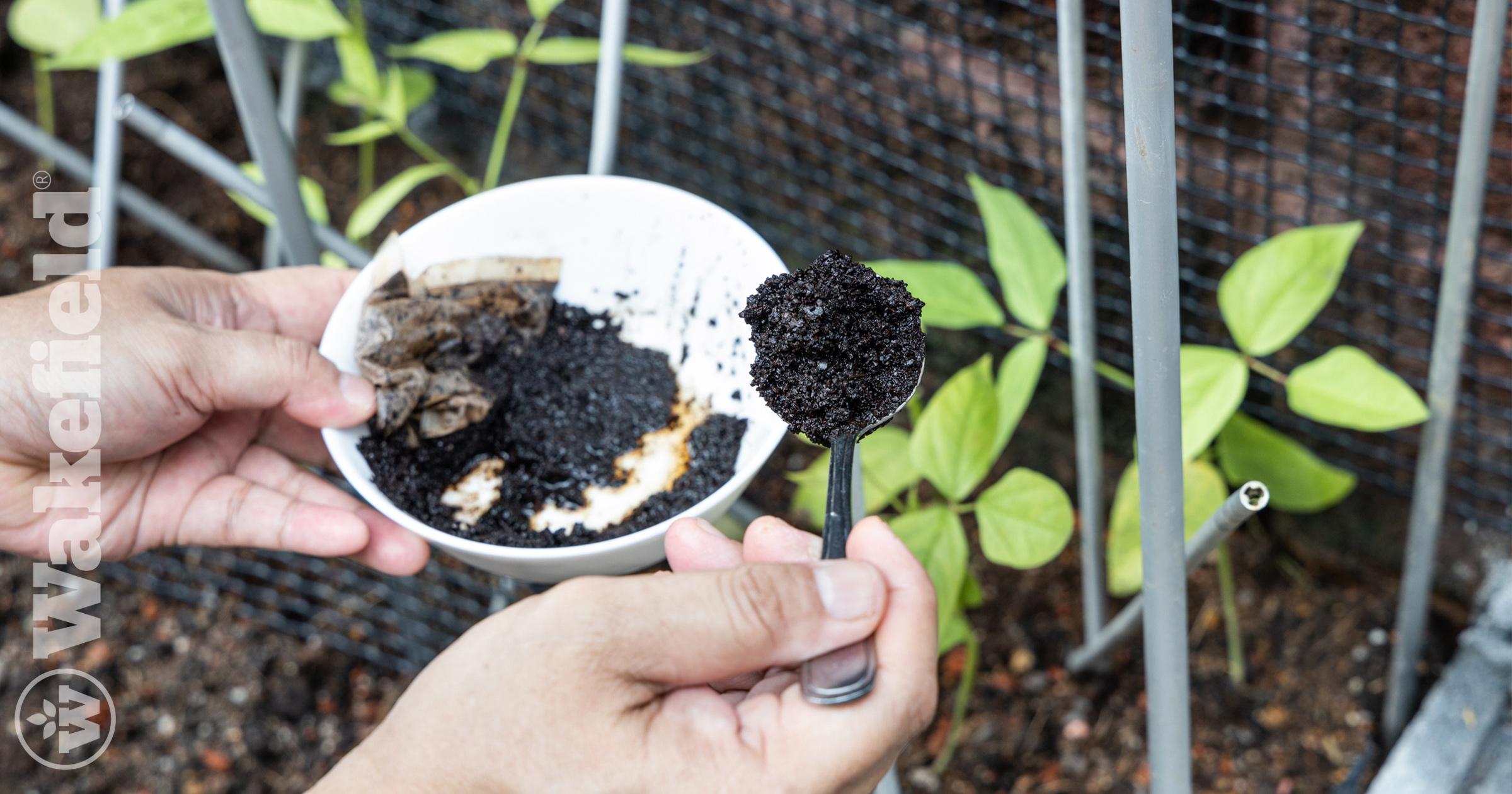
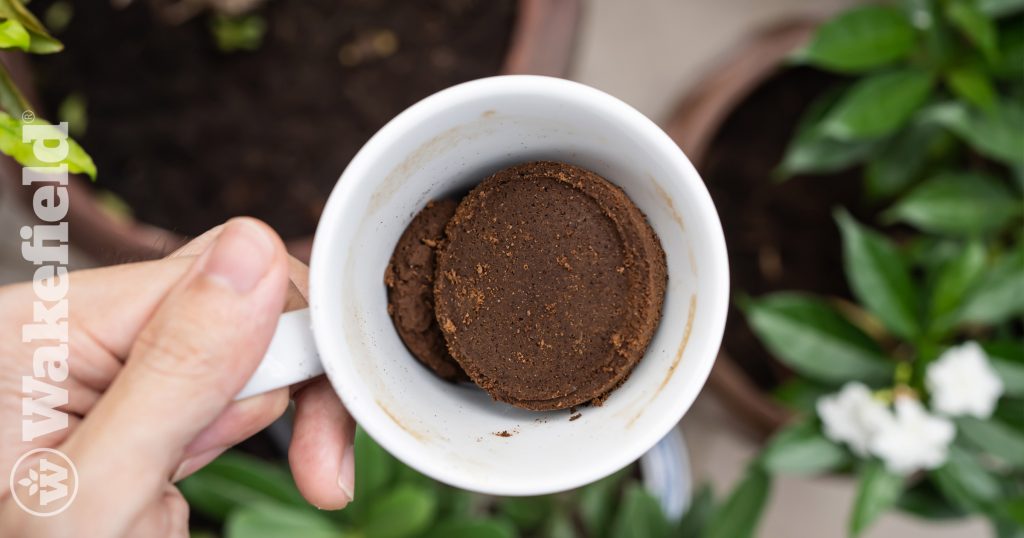
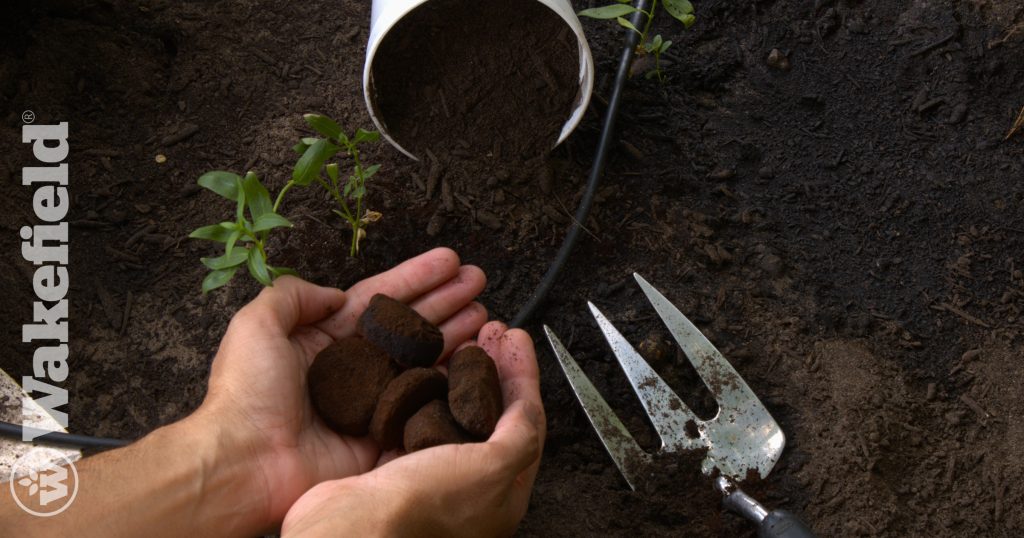
Spent coffee grounds are another type of coffee residue, but they should not be confused with biochar. Raw coffee grounds are organic material that continues to decompose. Biochar has been changed by heat into a more stable material with different physical and chemical properties. Coffee grounds can be composted or reused in other ways, but adding them directly to soil is not the same as applying biochar.
Keeping Carbon in a Stable Form
Biochar also connects coffee production with longer-term carbon management. Coffee plants and other biomass remove carbon dioxide from the atmosphere as they grow. When plant material decomposes, much of that carbon eventually returns to the atmosphere.
Converting suitable biomass into biochar changes part of that carbon into more stable forms that break down much more slowly. When the resulting biochar is used in soil or another long-term application, that carbon can remain stored for extended periods. This gives biochar a role in both beneficial reuse and carbon management.
Biochar’s Role in Coffee Production
Biochar brings together several properties that are useful to coffee growers. It can improve soil structure, help retain water and nutrients, support beneficial soil microbes, and add stable carbon to agricultural soils. The specific results depend on the soil, biochar, climate, and growing practices, but the underlying properties give biochar a useful role in soil management.
Coffee production also shows how biochar can support a more circular use of resources. Suitable biomass left from processing can become feedstock for biochar, turning a residual material into a useful product. Together, these opportunities make biochar worth considering as the coffee industry looks for ways to build healthier soils, use resources more efficiently, and support more sustainable production.