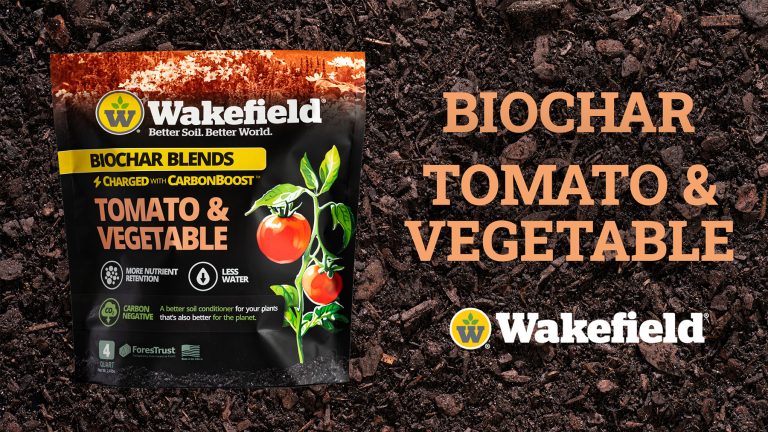

Biochar Is a Long-Term Soil Addition
Most gardens and landscapes need one main application of biochar rather than a new application every year. Biochar is a stable, carbon-rich soil conditioner. It remains in the ground for hundreds to thousands of years instead of breaking down within one growing season.
That long life allows the same biochar particles to keep supporting soil structure, water retention, nutrient management, and microbial habitat. Biochar does not create nutrients on its own. Its porous surfaces help retain nutrients supplied by soil, compost, and fertilizer, keeping them available within the root zone.
This makes biochar different from compost and fertilizer. Those materials supply organic matter or plant nutrients and may need regular renewal. Biochar creates a durable framework that works alongside them. Learn more about the lasting benefits of a biochar soil conditioner.
When Another Application Makes Sense
Although biochar remains active for years, smaller additions can be useful when the planting area changes. A new garden bed, an expanded landscape, a larger tree root zone, or fresh soil brought onto the property creates new ground that has not received biochar.
Routine maintenance can also provide opportunities to extend biochar coverage. Gardeners may include it in compost added to beds. Turf managers can apply a light amount after aeration, when openings help the particles reach the grass root zone. Biochar lost through major soil removal or erosion can also be replaced.
These additions expand or restore coverage; they do not replace biochar that has worn out. In an established root zone with a full initial application, annual reapplication is generally unnecessary.
The Initial Amount Matters Most
A useful starting point for garden soil is biochar at about 10% of the soil volume within the active root zone. For lawns and new sod, a blend closer to 5% can add useful pore space without displacing too much soil. The goal is even coverage where roots take up water and nutrients.
For a 100-square-foot garden bed improved four inches deep, 3 to 4 cubic feet of biochar creates a blend near 10%. Existing lawns can receive lighter surface applications following aeration. Read more about using biochar for lawn care and choosing an amount for the grass root zone.
A complete initial application gives biochar enough presence to influence the soil while leaving room for mineral soil, compost, and other growing media. Once that foundation is in place, normal care can focus on the water and nutrients plants need.
Biochar, Compost, and Seasonal Care
Biochar and compost work well together because they perform different jobs. Compost adds fresh organic matter and nutrients as it decomposes. Biochar helps retain some of that moisture and nutrition while providing protected surfaces for soil microorganisms.
Adding biochar to a compost pile also places it in contact with moisture, nutrients, and microbial life before the finished compost reaches the garden. Future compost applications can carry small amounts of biochar into new areas without requiring a separate full treatment. Explore the relationship between biochar and compost.
The best schedule is therefore simple: establish biochar throughout the root zone, then add it again when expanding coverage or supporting a specific maintenance project. Biochar’s lasting value comes from staying in the soil and continuing to work across many seasons.