In-ground gardens depend on the structure and resources already present in yard soil. Biochar improves that growing environment by adding stable pore space that retains water and nutrients, supports airflow, and provides habitat for soil microorganisms.
This Guide focuses on preparing new in-ground plots and improving established beds between plantings. Raised beds use a different volume calculation because their complete soil depth may be built from a prepared mix.
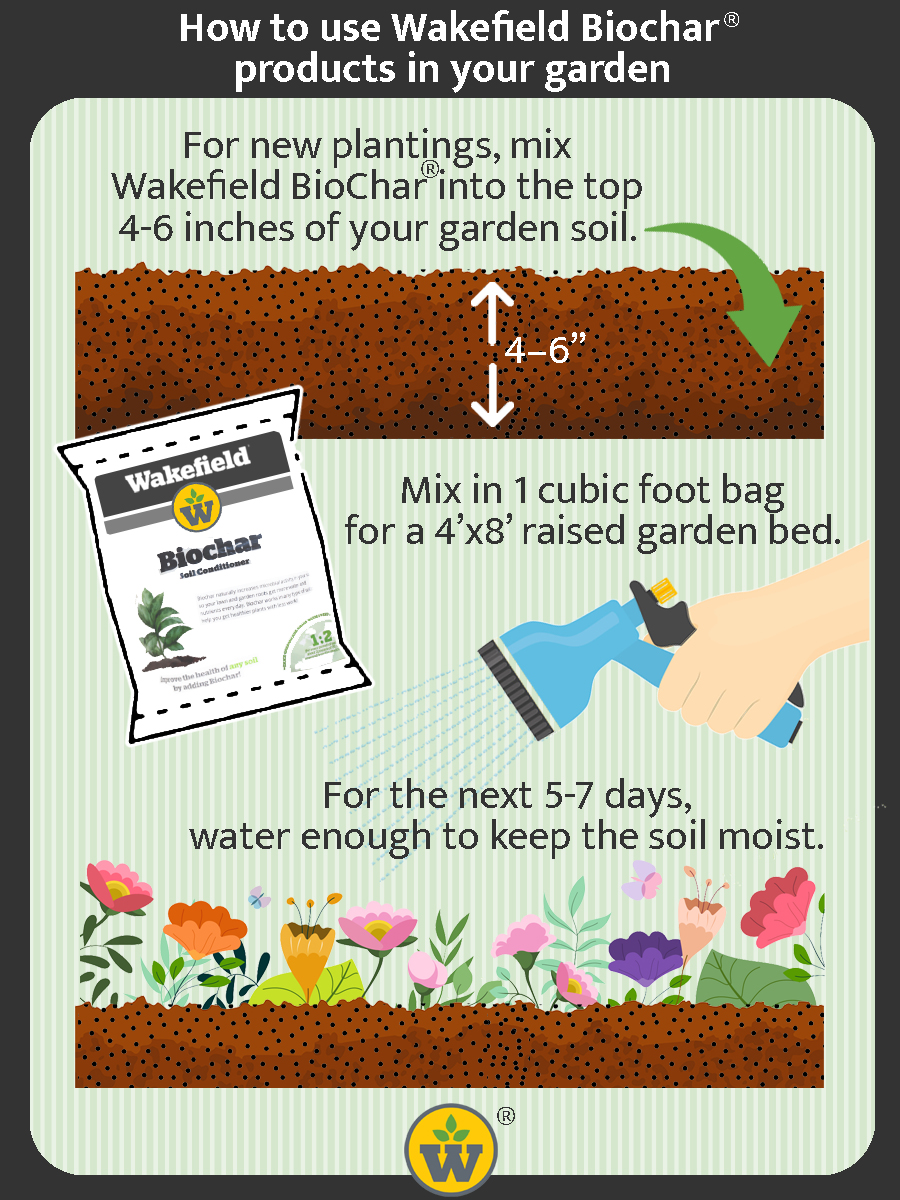
Choose the In-Ground Garden Area
Mark the vegetable, herb, or flower plot that will receive biochar. This Guide focuses on in-ground beds that use existing yard soil rather than raised beds filled with a prepared growing mix.
New plots allow the complete area to be amended before planting. Established gardens can receive biochar between crops, during bed renovation, or in open spaces around perennial plants.
Calculate the Root-Zone Volume
Measure the bed’s length and width, then choose the depth of soil being improved. In-ground gardens commonly focus on the upper four to six inches where many vegetable, herb, and flower roots are active.
A useful starting point is biochar at about 10% of that soil volume. For 100 square feet amended four inches deep, 3 to 4 cubic feet creates a blend near 10%.
Activate Biochar with Compost
Mix biochar with finished compost before adding it to the garden. Compost supplies organic matter, nutrients, moisture, and microorganisms, while biochar helps retain water and nutrients within the root zone.
An equal-volume biochar and compost blend provides a simple activation method. Moisten it and let it rest for seven to fourteen days when practical, or combine both materials directly during bed preparation.
Prepare a New Garden Plot
Remove unwanted vegetation and spread the measured blend evenly across the new plot. Incorporate it through the planned four-to-six-inch amendment depth with a garden fork, broadfork, or other method suited to the area.
Turn the soil until biochar and compost are distributed without concentrated pockets. Rake the surface level, then allow the bed to settle or proceed with planting according to the crop plan.
Improve an Established Garden
Apply biochar between growing cycles when open soil is easy to reach. Spread the blend over the bed and work it gently into the upper soil without disturbing permanent roots or established plant crowns.
In a planted perennial bed, use shallow openings between plants or combine biochar with a compost topdressing. Gradual applications can extend coverage across crowded areas without deep cultivation.
Plant, Water, and Protect the Soil
Plant seeds or transplants at their normal spacing and depth, then water thoroughly to settle soil around the roots. Continue the watering and fertility program appropriate for the plants.
Cover open soil with leaves, straw, wood mulch, or living plants to slow evaporation and erosion. Compost and mulch are renewed as they break down. Biochar remains for many years and needs more application mainly when the garden expands or receives new soil.
How Biochar Supports Garden Soil
Biochar is a stable, carbon-rich soil conditioner made by heating suitable plant material with limited oxygen. Its internal and external surfaces remain in soil and continue interacting with water, nutrients, minerals, roots, and microorganisms.
- Water retention: Biochar holds moisture within the root zone between rainfall and irrigation.
- Nutrient retention: Its surfaces retain nutrients supplied by compost, soil, and fertilizer.
- Soil structure: Stable pore space supports water movement, airflow, and root growth.
- Microbial habitat: Biochar provides protected surfaces for organisms involved in nutrient cycling.
- Carbon storage: Biochar keeps plant-based carbon in a stable form that resists rapid decay.
Biochar does not replace plant nutrition. It works alongside compost and fertilizer by helping the soil retain and manage the resources they supply. Learn more about what biochar is and how its porous structure is formed.
New and Established Gardens
New plots make broad mixing straightforward because the soil can be prepared before roots occupy the bed. Established gardens require timing and gentler methods. Applying between annual crops or during routine compost work protects current roots while extending biochar coverage.
For raised-bed calculations and complete growing mixes, use the Gardens and Raised Beds Guide. The Garden Soil Amendments Guide compares biochar with compost, mulch, and mineral amendments.
The broad How to Use Biochar Guide connects garden use with lawns, trees, shrubs, landscapes, houseplants, and professional turf.
A Lasting Part of the Garden
Garden compost and mulch continue breaking down and returning organic matter to the soil. Biochar serves a different role. Its stable structure remains through repeated planting, watering, harvesting, and seasonal bed preparation.
Explore Wakefield’s Premium Biochar soil conditioner when planning an in-ground garden application. Careful measurement and even placement create a long-term foundation beneath vegetables, herbs, flowers, and perennial plants.