
Tall fescue is a widely used turfgrass valued for its strong roots and ability to stay green through changing weather. Like all grasses, it depends on a healthy root zone with reliable access to water, nutrients, and air. A demonstration conducted by the University of Missouri for Wakefield BioChar explored how different amounts of biochar affected young tall fescue grown in containers.
How the Tall Fescue Demonstration Worked
The demonstration compared soil and compost blends containing biochar at 5, 8, 10, 12, and 15 percent by volume. Control pots without biochar provided a visual comparison. Tall fescue seeds grew indoors under lights for about 20 days and received daily watering.
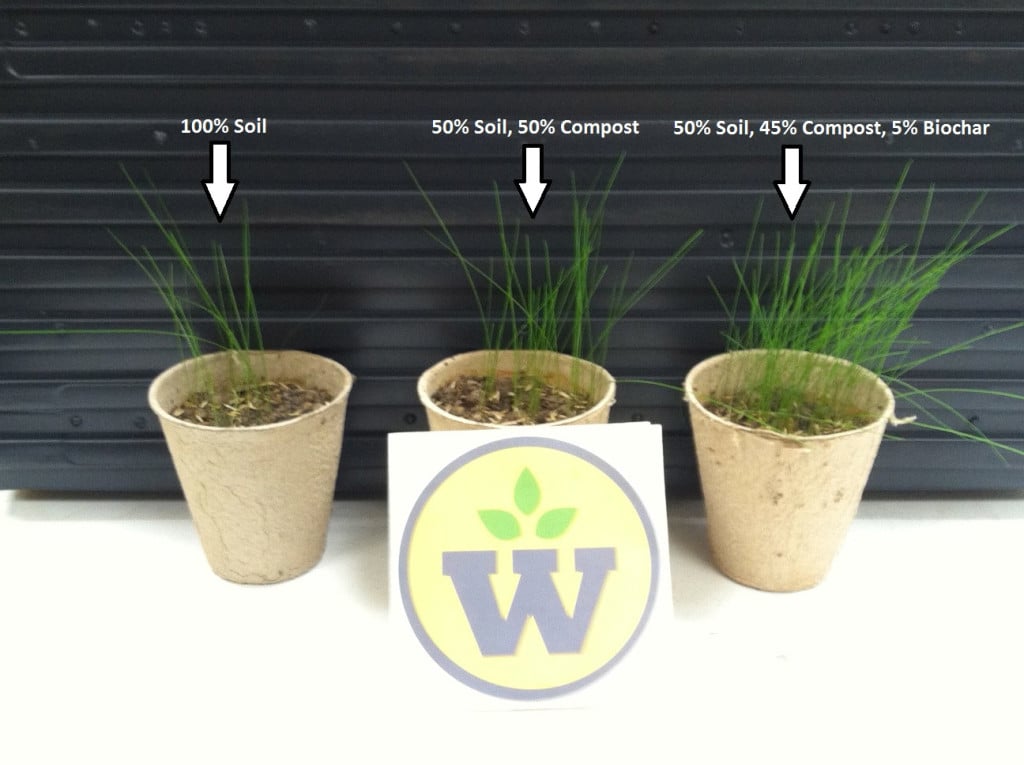
The pots containing 5 percent biochar showed the strongest growth in the visual comparison. Higher amounts also supported grass growth, but the difference became less clear as the share of biochar increased. The demonstration did not record measurements such as plant weight, root length, or water use, so the image is best understood as a practical observation rather than a full controlled study.
Why Biochar Supports Tall Fescue
Wood-based biochar has a porous structure that improves the way soil manages water and nutrients. Its internal surfaces hold moisture in the root zone, helping grass remain hydrated between rain or watering. Biochar also retains nutrients supplied by compost and fertilizer, keeping more of them available to growing roots.
Those pores add lasting space for air, water, roots, and soil organisms. Better soil structure supports deeper rooting and helps turf recover from heat, foot traffic, and dry periods. Biochar also provides habitat for microorganisms that help cycle nutrients through the soil. These qualities explain why biochar is useful for more than early seed growth; it supports the soil system beneath an established lawn.
What the Five Percent Result Means
The strongest growth at 5 percent shows that a modest amount of biochar can make a meaningful difference in the root zone. More is not always necessary. Biochar works by becoming part of the soil structure, not by replacing the soil itself.
The demonstration also highlights the value of combining biochar with nutrient-rich material. Compost supplies organic matter and plant nutrients, while biochar helps retain those resources. Water moves into the porous biochar and carries dissolved nutrients through the surrounding soil, creating a more dependable environment for roots.
Building Healthier Turf Soil
Biochar delivers its greatest value when it is mixed into the active root zone. That placement protects the lightweight material from wind and surface runoff while putting its water- and nutrient-holding structure where grass can use it.
The Missouri demonstration offers a clear example of biochar supporting tall fescue with a relatively small share of the soil blend. Its broader lesson applies across turf care: healthy grass begins with soil that can hold resources, support roots, and remain resilient over time. Explore Wakefield’s guide to using biochar for lawn care, learn about biochar’s role in soil water retention, or view available Wakefield BioChar products.
References
-
Tall Fescue Biochar Container Demonstration Demonstration requested by Wakefield BioChar 2015. The legacy Wakefield article attributes the demonstration to the University of Missouri. Original report documentation and methodology should be confirmed.