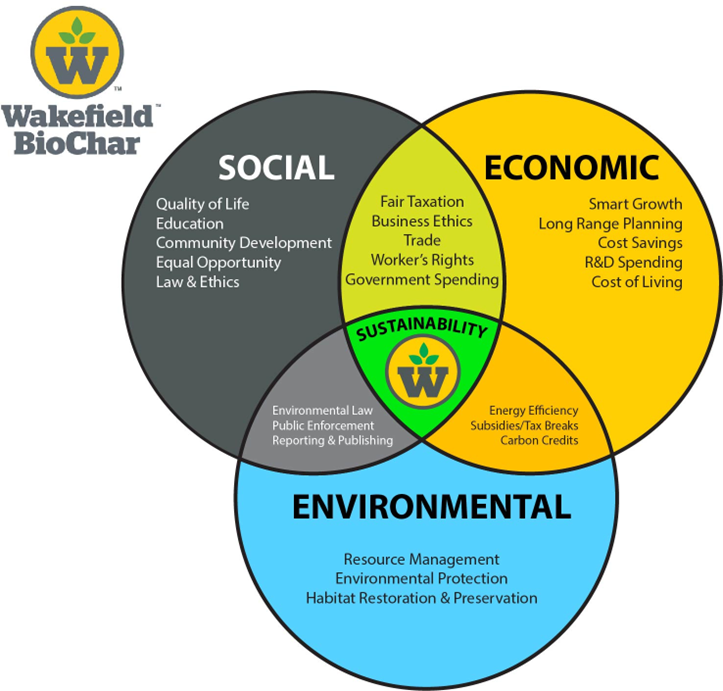
Sustainability means meeting today’s needs while protecting the resources future generations will depend on. It brings together environmental health, economic strength, and the well-being of communities. Biochar supports all three by turning wood waste into a useful, long-lasting material with applications in soil, water management, filtration, and carbon storage.
Turning Wood Waste into a Resource
Branches, bark, sawmill leftovers, and other wood materials contain carbon that trees removed from the air while growing. When this material decays or burns, much of that carbon returns to the atmosphere. Biochar production gives clean wood waste another path.
Biochar is made through pyrolysis, a process that heats biomass with very little oxygen. The heat changes the wood into a stable, carbon-rich structure instead of reducing it to ash. Much of the carbon remains in the finished biochar and can stay there for a very long time. The process can also produce useful heat and energy, helping manufacturers make better use of each load of biomass.
Lasting Benefits for Soil and Water
Wood-based biochar has a network of tiny pores and a large internal surface. In soil, that structure helps hold water and plant nutrients in the root zone. It also creates space for air, roots, and microorganisms involved in nutrient cycling. Because biochar breaks down slowly, it continues supporting soil structure and resource efficiency for many years.
These qualities make biochar valuable in gardens, farms, lawns, landscapes, and land restoration. Better water retention can help plants through dry periods. Improved nutrient retention helps keep compost and fertilizer available to roots. Healthy soil can support plant growth while reducing the loss of water and nutrients from the system.
Biochar’s porous surface also has uses beyond soil. Filtration systems can use carbon-rich materials to capture certain compounds from water or air. This gives properly designed biochar products a role in water treatment, odor management, and other environmental applications.
Environmental, Economic, and Community Value
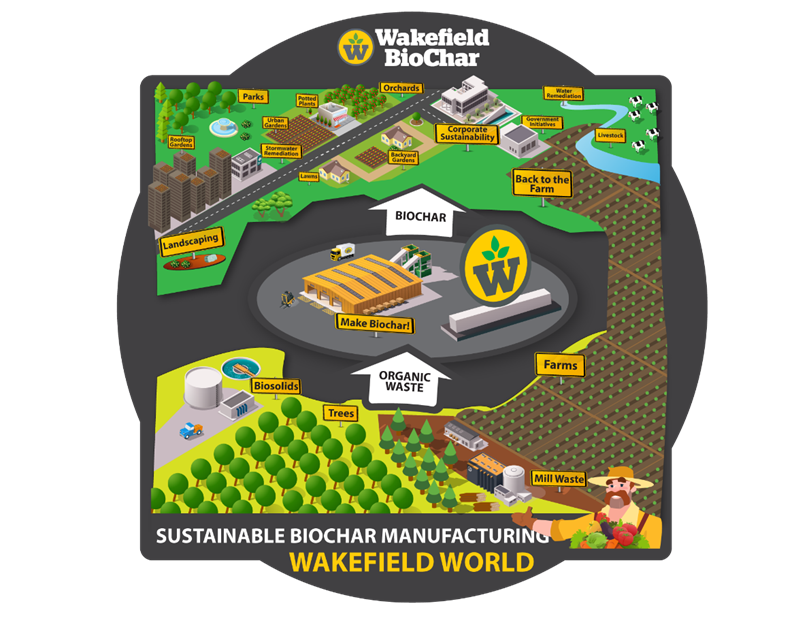
The environmental value of biochar begins with beneficial reuse. Instead of treating wood leftovers as a disposal problem, biochar production turns them into a resource. The finished material stores carbon and can improve the way soil and filtration systems manage water, nutrients, and other compounds.
This approach also creates economic value. Mills, land managers, and communities gain another option for managing clean biomass. Biochar production supports manufacturing, transportation, land care, agriculture, research, and environmental services. The material can then serve many markets rather than ending its useful life as waste.
Communities benefit when local resources support local work and healthier land. Productive soil strengthens gardens, farms, parks, and green spaces. Education and research around biochar also build practical knowledge about carbon, soil health, water, and responsible material use.
A Circular Approach to Sustainability
A circular economy keeps materials in useful service instead of discarding them after one use. Biochar is a strong example: wood waste becomes a stable carbon material, production energy can be recovered, and the finished product supports soil or environmental systems.
Wakefield BioChar advances this cycle by transforming recycled wood into products designed for lasting use. The result connects waste reduction, carbon storage, healthier soil, water management, and economic opportunity. Learn more about what biochar is and Wakefield’s approach to beneficial reuse.