Prepare the lawn
Mow the grass so the biochar can reach the ground instead of resting on tall blades. Rake away leaves, sticks, and heavy clippings. If the soil feels hard, sheds water, or has thin high-traffic patches, aerate those areas first. The openings help biochar, water, and oxygen enter the root zone rather than remaining on the surface.
Spread the biochar evenly
Cover the lawn with a light, uniform layer of biochar, using a broadcast spreader for larger yards or spreading by hand in small areas. Follow the product directions for the lawn size. Biochar can also be blended with compost or topdressing material before spreading. Compost supplies fresh organic matter and nutrients, while biochar helps the soil hold those resources near the roots.
Water it into the root zone
Water the lawn after spreading to settle the biochar below the grass blades and into contact with the soil. Moisture also controls dust and begins filling the material’s pores. Water deeply enough to move the fine particles toward the roots without creating runoff. Continue the lawn’s normal watering schedule while biochar helps store moisture between rain and irrigation.
Maintain the grass normally
Continue mowing at the proper height for the grass, watering during dry weather, and supplying nutrients through the lawn’s usual feeding plan. Biochar is a soil conditioner rather than a complete fertilizer, so it supports these practices instead of replacing them. Its lasting pore structure improves the root zone across future seasons without requiring a new surface layer every year.
What Biochar Changes Below the Grass
Most lawn roots grow near the surface, where soil can dry quickly and nutrients can leave with drainage. Biochar adds holding surfaces throughout this active layer. More moisture and plant food remain within reach, helping grass maintain steady growth between watering and feeding.
Biochar also adds pore space to packed ground. Air can move through the soil, and roots have more room to spread. A wider, stronger root system reaches more water and nutrients while helping the grass recover from mowing, foot traffic, pets, play, and seasonal heat.
The pore network provides habitat for bacteria, fungi, and other soil organisms. These communities break down organic matter and move nutrients through the root zone. Their activity helps connect compost, fertilizer, grass clippings, and natural soil processes into one living system.
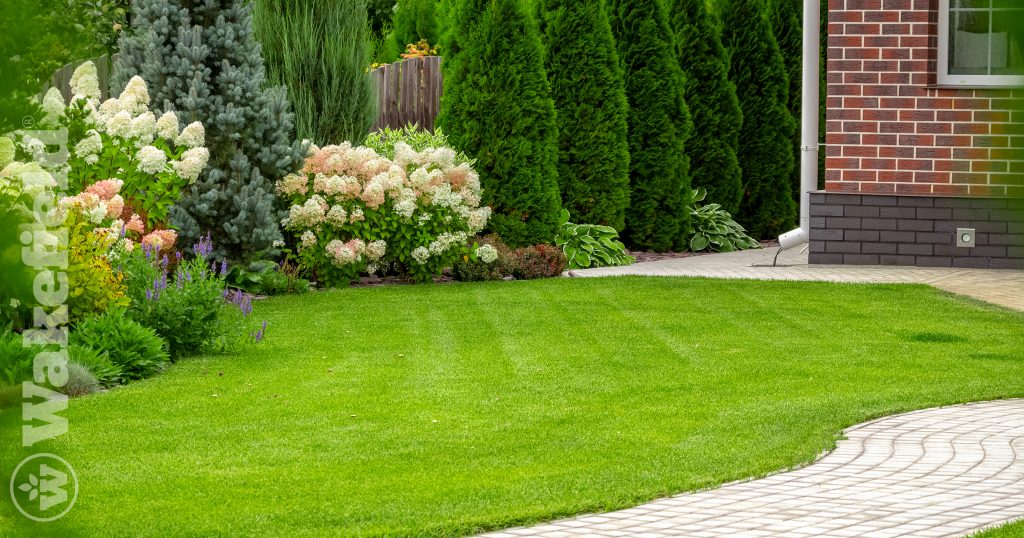
As soil structure improves, the lawn becomes better prepared for normal stress. Stored water supports grass through dry periods, retained nutrients help maintain green growth, and stronger roots support recovery. The result is a lawn that depends on healthier soil rather than constant surface corrections.
Example: Residential Lawn Care with Biochar
This Wakefield video follows Atlanta homeowner Scott Schuman as he uses biochar on his residential lawn. It provides a real-world example of soil-focused lawn care and shows biochar being used within an ordinary home landscape.