
Strong landscapes begin below the surface. Soil must hold useful moisture and nutrients while allowing air, water, and roots to move. Biochar supports those functions with a stable, porous structure that remains part of the root zone for many years.
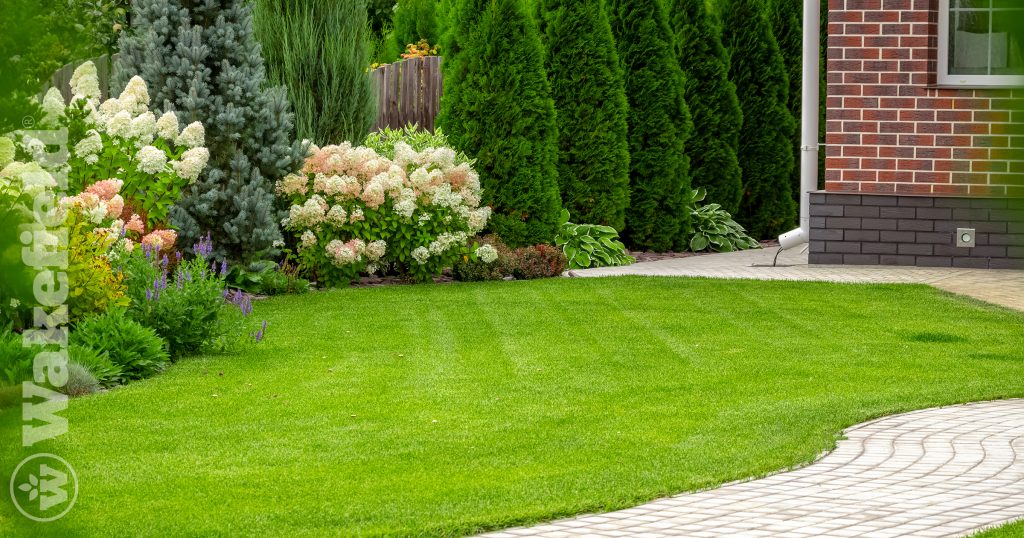
This Guide covers new and established landscape beds, trees, shrubs, and flowers. The process can be scaled from a small border to a large property by measuring the soil volume and distributing biochar through the area roots will use.
Define the Landscape Area
Identify the beds, tree zones, shrub borders, or new planting areas that will receive biochar. Plan around the soil volume used by mature roots rather than placing all the material beside a stem or inside a narrow planting hole.
Large projects can be divided into sections and completed during normal bed preparation, planting, aeration, or renovation work. This makes even distribution easier and limits disturbance to established plants.
Calculate the Biochar Volume
For general landscaping, use about 5–10% biochar by volume of the finished soil mix, following the product’s directions. [1]
A finished soil mix covering 100 square feet at four inches deep contains about 33 cubic feet. At 5–10%, that mix contains approximately 1.7–3.3 cubic feet of biochar.
Prepare a Biochar and Compost Blend
Combine biochar with finished compost to bring stable pore space and fresh organic matter into the landscape together. Compost supplies nutrients and active organic material, while biochar helps retain moisture and nutrients within the root zone.
Mix equal volumes for a simple preparation blend, counting only the biochar portion toward the soil application rate. If preparing ahead, keep the mixture moist for about one to two weeks, or combine the materials during soil preparation when product directions allow. See how to prepare biochar with compost. [2]
Apply It to New Planting Areas
Spread the measured blend evenly across new beds and incorporate it through the planned amendment depth. For trees and shrubs, distribute biochar across the surrounding root-zone soil and backfill instead of concentrating it against the trunk or root ball.
Even coverage supports root growth beyond the original planting opening. It also places biochar where it can interact with irrigation, rainfall, nutrients, minerals, and soil organisms over time.
Work It into Established Landscapes
Established beds can receive biochar during topdressing, division, replanting, or seasonal compost applications. Gently work the blend into open soil between plants without damaging roots.
Around established trees and shrubs, distribute the blend broadly across accessible soil. An arborist can help plan deeper incorporation around mature roots. Cover the amended surface with compost or mulch to keep particles in place and protect soil moisture.
Water, Mulch, and Maintain
Water after application to settle the soil and begin moving moisture and dissolved nutrients across biochar’s surfaces. Add mulch to exposed beds to slow evaporation, reduce erosion, and moderate surface temperature.
Continue the normal watering, fertility, pruning, and planting program for the landscape. Biochar remains in soil for many years, so it does not need seasonal replacement. Add more when expanding beds, installing new plants, or introducing new soil.
Why Biochar Supports Landscape Soil
Landscape soil often manages competing demands. It must drain after heavy rain, retain moisture between irrigation cycles, support repeated planting, and remain open enough for roots and soil organisms. Biochar’s pore network contributes to each part of that system.
- Water retention: Biochar helps soil retain moisture within the root zone, supporting plants between rainfall and irrigation.
- Nutrient retention: Its surfaces help retain nutrients supplied by compost, fertilizer, and soil organic matter, keeping them available for plant uptake.
- Soil structure: Stable pore space supports the movement of water and air through managed soil.
- Microbial habitat: Biochar surfaces provide protected spaces for microorganisms involved in nutrient cycling.
- Carbon storage: Biochar keeps plant-based carbon in a stable form that resists rapid decay.
Biochar is a soil conditioner rather than a complete fertilizer. It helps the landscape retain and manage resources supplied by the wider soil-care program. Learn more about what biochar is and how its structure is formed.
Match the Method to the Project
New beds allow biochar, compost, and soil to be mixed before plants are installed. Existing beds require gentler surface work around established roots. Tree projects benefit from broad distribution because roots spread well beyond the planting opening.
For detailed tree placement, visit the Biochar for Trees Guide. Garden and ornamental beds can also draw from the Garden Soil Amendments Guide.
The broader How to Use Biochar Guide explains the universal application process and connects to lawn, raised-bed, container, and professional turf resources.
Long-Term Value for Landscapes
Compost and mulch change as they decompose, so they remain part of seasonal landscape care. Biochar serves a different role. Its carbon structure persists and continues interacting with water, nutrients, minerals, roots, and microorganisms across many seasons.
That durability makes careful placement important. A well-distributed application creates a lasting soil foundation beneath trees, shrubs, flowers, and mixed planting beds. Explore Wakefield’s Premium Biochar soil conditioner when planning a landscape project.
Sources and notes
-
Landscaping and turf application guidance The 5–10% range describes biochar’s share of a finished general landscape soil mix. The example uses the final mix volume; compost in a preparation blend is counted separately from biochar View Source
-
Garden biochar guide, page 7 describes compost preparation blends. Biochar Guidelines for Agricultural Applications, page 3 suggests one to three weeks, while Arizona recommends several weeks. These are practical intervals, not a universal activation endpoint. RHS guidance allows incorporation at planting following manufacturer directions View Source