
Biochar changes the environment where roots grow. Its pore structure can help a soil mix hold water, retain nutrients, and maintain space for air and roots.
A container trial with Cherry Belle radishes explored how those properties affect early plant growth. The results show how biochar can work with available moisture to support germination, roots, and young plants.
How the trial compared biochar and water
The University of Missouri project tested 60 Cherry Belle radish seeds over 22 days. The growing mix contained topsoil, compost, and one of six biochar levels ranging from 0% to 15% by volume. Each biochar level was paired with daily water amounts of 5, 10, 15, 20, or 25 milliliters.1
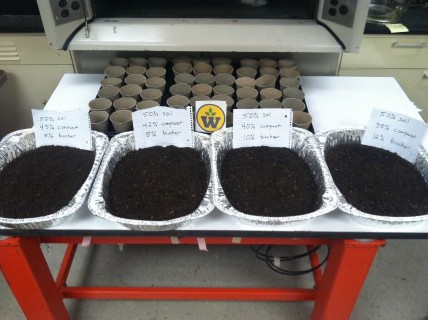
The team tracked germination, plant height, root length, weight, and leaf count. Water had the strongest overall effect, but the biochar rate also shaped how well the young plants used the conditions in each container.
Where biochar produced the strongest growth
The strongest overall combination was 10% biochar with 25 milliliters of water per day. It produced the best root length, plant weight, and germination in the trial. The tallest plants grew with 15% biochar at the same water level.1
These results make the moderate biochar rate especially useful. More biochar did not lead to the best result for every measure. Instead, the soil, compost, biochar, and water worked as a system, with different combinations shaping different parts of early growth.
Root length matters because a larger root system can explore more of the soil mix for moisture and nutrients. Better germination and plant weight also suggest that the 10% mix created favorable conditions during the first weeks of growth.
How biochar supports the root zone
Biochar contains pores that can take in water and release it back into the surrounding soil. A large review of soil-water studies found that biochar increased the amount of plant-available water in soil.2
That water-holding capacity helps explain why biochar can complement regular moisture in a root zone. In the radish trial, the largest plants were found where enough water and a useful proportion of biochar came together.
Biochar can also help soil retain nitrogen supplied by compost or fertilizer. A review of field studies found greater plant nitrogen uptake and less nitrogen leaching after biochar application.3 Together, water and nutrient retention help create a more productive root environment.
What the results mean for growers
The researchers prepared the soil, compost, and biochar mixtures for 14 days before planting. They turned and watered the mixtures each day. This preparation gave the materials time to combine and allowed the biochar to take in moisture before the seeds were added.1
For gardeners and growers, the practical lesson is to make biochar part of the root zone rather than leaving it on the surface. Mixing it with soil and nutrient-rich material helps connect its pore space with the water and nutrients plants use.
The radishes responded best when moisture, biochar, soil, and compost worked together. By holding water and nutrients near developing roots, biochar can help create the conditions plants need for strong germination and steady early growth. That stronger start gives young plants a better foundation for continued growth.
References
-
Assessment of Water and Biochar on the Growth of Cherry Belle Radishes University of Missouri Honors Project 2015. Indoor 22-day container trial with 60 seeds, six biochar levels, five daily water amounts, and two replicates per treatment. The project measured early growth; no mature radish bulbs formed. View Source ↩
-
A Meta-Analysis on Biochar’s Effects on Soil Water Properties—New Insights and Future Research Challenges Science of the Total Environment, 714, 136857 2020. Biochar increased plant-available water overall. Responses varied with soil texture, biochar properties, application rate, and study conditions. View Source ↩
-
Effects of Biochar Application on Soil Nitrogen Transformation, Microbial Functional Genes, Enzyme Activity, and Plant Nitrogen Uptake: A Meta-Analysis of Field Studies GCB Bioenergy, 13, 1859–1873 2021. Field-study meta-analysis found greater plant nitrogen uptake and less nitrogen leaching overall. The radish trial did not measure nutrient movement directly. View Source ↩